
Post-Eyebrow Transplant Results: What to Expect During the Healing Process?
Since this is a procedure performed on the face, Appearance after eyebrow transplantation, directly affects the time it takes to return to social life and psychological well-being. At Medlook Clinic, personalized natural eyebrow design (eyebrow transplant) Once the treatment plan has been developed and the roots have been transplanted through a successful microsurgical procedure, the issue our patients are most curious about is the recovery timeline.
Featured Headlines
ToggleAlthough the procedure is extremely discreet and comfortable (especially istanbul eyebrow transplant centers (thanks to the meticulous methods we use), a micro-level trauma is created in the skin, triggering the body’s natural healing process. In this article, we transparently explain the changes you’ll experience day by day.
Day-by-Day Post-Eyebrow Transplant Process and Post-Transplant Appearance
Immediately after an eyebrow transplant, you can walk out of our clinic on your own, with your eyes fully open. We can divide the healing process into three main stages: Scabbing, Shock Loss, and Growth (Settling) stages.
| Recovery Phase | Expected Image | Things to Consider |
|---|---|---|
| Days 1–3 | Tiny red spots (bleeding clots) and mild edema (swelling) at the injection site. | It should never be rubbed, exposed to water, or placed face down. |
| Days 4–10 | The red spots dry up and become the size of a pinhead scaling turns into. | Wash the area using the lotions recommended by the clinic. Do not pick at the scabs. |
| Days 15–30 | The transplanted eyebrows begin to fall out gradually (Shock Spill). There is no need to worry. | It's a normal cycle. The root remains beneath the skin; only the hair shaft on top falls out. |
| 3rd - 6th month | The shed hairs begin to grow back permanently from their roots and continue to grow. | As the hairs grow longer, they should be trimmed with very light scissors. Tweezers are strictly prohibited. |
| Months 8–12 | The final, fully settled result is visible. The eyebrows have taken on their completely natural shape. | You now have natural eyebrows that are entirely your own; no extra care is needed. |
Critical Guidelines to Follow After Eyebrow Transplantation
İşlemin başarısı %50 hekimin ustalığına bağlıysa, kalan %50 hastanın evde gösterdiği özene bağlıdır.
- Protection Against Physical Impacts: The first 10 days are the period when the grafts take hold in the skin. You must be very careful not to rub your skin when pulling a T-shirt over your head while getting dressed, and not to rub your face against the pillow while sleeping.
- Edema (Swelling) Management: There may be slight swelling on the forehead and around the eyes. Applying ice (not directly to the eyebrows, but to the forehead or cheekbones) and drinking plenty of water will quickly reduce the swelling.
- Sun and Sweating: For the first month, you must absolutely avoid direct sunlight, tanning beds, strenuous exercise that causes excessive sweating, and Turkish baths and saunas. Heat prevents the roots from taking hold and increases the risk of infection.
At Medlook, in line with our “protective and holistic” (longevity) approach to aesthetic procedures, we never leave our patients on their own during the post-procedure period; instead, we closely monitor hair follicle development through periodic checkups. With proper care, eyebrow transplantation is a lasting investment that will add meaning to your face for the rest of your life.
At Medlook, every treatment is customized following a detailed facial analysis. To learn more about the recovery process, please contact us you can contact.
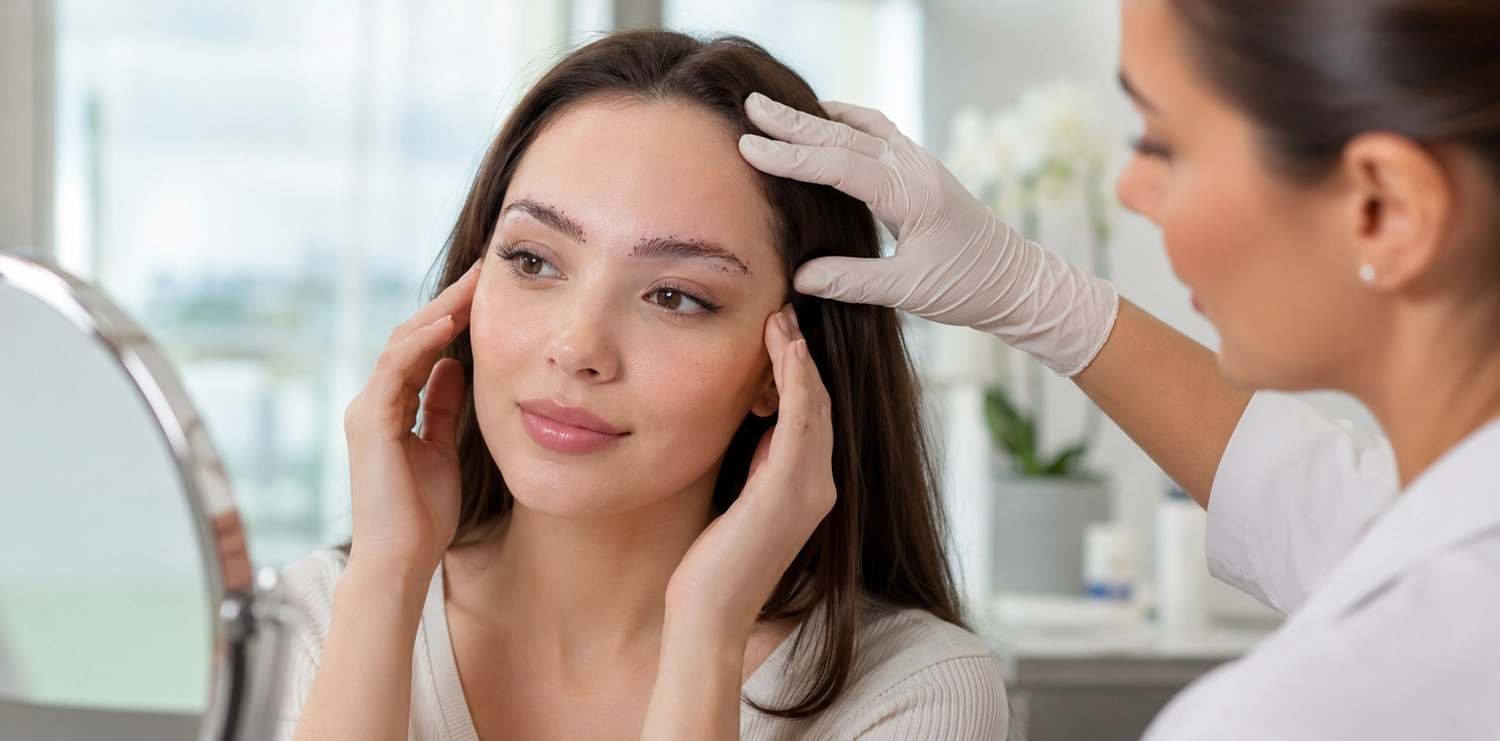
Day-by-Day Recovery Schedule After FUE Eyebrow Transplantation
The main concern our patients have after surgery is when the scabbing and redness in the eyebrow area will subside. The recovery process after FUE eyebrow transplantation is extremely fast, but it involves sensitive periods that require close monitoring on a day-to-day basis:
- Days 1 and 2 (Initial Effects): At the injection sites, tiny red blood clots about the size of a pinhead may appear. This is perfectly normal. Mild swelling may occur in the forehead area due to the local anesthetic. During this time, you must not touch your eyebrows and should avoid contact with water.
- Days 3 and 5 (Onset of Peeling): The red spots begin to dry out and turn into tiny scabs. You may experience a slight itching sensation on your skin. This itching is the clearest sign that healing has begun. The first wash using the moisturizing lotions and special shampoo recommended by our clinic begins during these days.
- Days 6 and 10 (Molting Period): With regular washing, the scabs soften and begin to fall off. By the end of the 10th day, almost all of the scabs will have fallen off, revealing fresh, slightly pink new skin underneath.
- Days 11 and 15 (Full Return to Social Life): Since the scabs have completely fallen off, it is not apparent from the outside that an eyebrow transplant was performed. The skin, which had turned pink, returns to its normal color.
Shock Hair Loss After Eyebrow Transplantation and Psychological Management
Between the 2nd and 4th weeks after the procedure, the “Shock Loss” process begins—a phenomenon that causes our patients the most anxiety but is medically speaking entirely natural. The transplanted hair strands, whether long or short, gradually fall out. Although many patients panic, thinking that the transplanted follicles have been damaged, what is actually falling out are the hair strands, not the follicles. The follicles remain alive beneath the skin and are adapting to their new locations. It is very important to be patient during this process and to avoid plucking the eyebrow area with tweezers. Starting in the third month, the follicles will begin to produce new eyebrow hairs.
Protocol for the First Wash and Scab Shedding After Eyebrow Transplantation
One of the most critical stages of an eyebrow transplant procedure is the initial cleansing process, which begins on the third day. This process ensures that the scabs surrounding the transplanted follicles are gently removed without causing damage, allowing the skin to breathe.
- Applying Moisturizing Lotion: The special moisturizing lotion or panthenol-based foam provided by our clinic is applied to the transplanted area with very light touches using the fingertips. The lotion is left on for approximately 20–30 minutes to soften the scabs.
- Rinsing Rinse the lotion off gently with lukewarm water that is definitely not under pressure. Instead of directing the water stream directly at your eyebrows, it is much safer to pour the water over them using your hand or a cup.
- Shampooing The special medical shampoo is lathered in the palm of the hand, and the lather is gently applied to the eyebrows. Do not rub or scrub under any circumstances.
- Drying: After washing, let your eyebrows air dry, or gently blot away the moisture with a very soft paper towel using light, dabbing motions.
- Shedding of the Shells (Day 10): Thanks to these daily washes performed up to the 10th day, the scabs soften thoroughly. During the wash on the 10th day, very gentle circular massages with the fingertips help the scabs fall off. Since scraping the scabs with your fingernails or forcibly pulling them off can cause the implanted roots to dislodge, this procedure must be performed extremely gently.
Things to Keep in Mind During the Itching and Scabbing Phase After FUE Eyebrow Transplantation
Between the 3rd and 7th days after the procedure, it is perfectly normal to experience mild to moderate itching in the transplanted areas as part of the healing process. However, scratching your eyebrows with your fingernails or scratching them vigorously during this period can cause the hair follicles, which are still taking root, to become dislodged or lead to infection. To relieve the itching, the moisturizing foam and lotions prescribed by our clinic should be applied regularly, and cold compresses should be used instead of direct contact. Allowing the scabs to fall off on their own will speed up the healing process. Forcibly removing scabs can result in permanent scarring.
Practical Ways to Minimize Swelling and Bruising After Eyebrow Transplantation
After the procedure, mild swelling (edema) around the eyes and on the forehead, or—very rarely—mild yellowish or purplish discoloration, may occur. This is entirely due to the local anesthetics draining downward under the influence of gravity. To minimize edema, avoid tilting your head forward for the first 3 days, and keep your head upright when looking at a TV or phone screen. In addition, applying a light cold gel to the temple area as recommended by your doctor will constrict the blood vessels and prevent swelling. Avoiding salty and heavy foods and drinking plenty of fluids will also help the edema be quickly flushed out of the body through urine.
Contact Us
Contact Us Now for Free Consultation and Appointment!
Frequently Asked Questions (FAQ)
Thanks to the lotion and cleansing routine we recommend, the scabs usually soften and fall off completely between the 8th and 12th day. After the scabs have fallen off, it’s not obvious from the outside that the procedure was performed.
Şok dökülme hastaların yaklaşık %80-90'ında görülen doğal bir fizyolojik evredir. Saç kökleri travma sonrası savunma mekanizması olarak üzerindeki kılı atar ve uyku fazına geçer. Ancak 'kök' derinin altındadır ve 3. aydan itibaren çok daha güçlü bir şekilde yeniden çıkacaktır. Kesinlikle boşa gitmez.
You must wait at least one month before applying makeup to the eyebrow area (eyebrow pencil, eyeliner, etc.). Chemicals can enter through the open microchannels and damage the hair follicles. However, you can apply makeup to other areas of the face (lips, cheeks) a few days after the procedure.
Appointment and Contact
At Medlook, each application is planned individually after detailed facial analysis. For more information about eyebrow transplantation, please contact us at you can contact. To review the vision of our clinic about us visit our page.






 Turkish
  English
  German
  French
  Italian