

Migraine is much more than just an occasional headache. It is a neurological disorder characterized by intolerance to light and sound, nausea, visual disturbances, and throbbing attacks that bring daily life to a standstill. If the frequency of attacks exceeds a certain threshold within a month, the condition is referred to as “chronic migraine,” and managing it with conventional pain relievers becomes increasingly difficult. Patients often experience a constant state of alertness because they cannot predict when the next attack will strike.
And that's exactly where it comes in migraine botox, stands out as a scientifically sound option for patients who do not want to be at the mercy of attacks. Although it shares the same active ingredient as treatments for cosmetic purposes, its purpose is entirely different: not to correct a wrinkle, but to improve quality of life by reducing the frequency and severity of headache attacks. At Medlook, the process always begins with a physician’s evaluation; because when applied to the right patient with the correct diagnosis, the benefits of this method increase significantly.
What Is Botox for Migraines?
Migraine Botox, active ingredient botulinum toxin type A It is a preventive treatment based on the injection of very low doses of the drug (onabotulinumtoxinA) into specific muscles in the head and neck region. This treatment was approved by the U.S. Food and Drug Administration (FDA) in 2010 specifically for the prevention of chronic migraine; it is a method that has been evaluated through extensive clinical trials involving thousands of patients.
Contrary to a common misconception, this treatment does not work simply by relaxing the muscles. Botulinum toxin type A inhibits the release of neuropeptides—such as CGRP and substance P, which carry pain signals—from nerve endings. This prevents the peripheral nerves that trigger pain from becoming hypersensitive; over time, this also indirectly reduces the activation of pain-processing pathways in the brain. In short, the goal here is to intervene in the pain mechanism itself before pain even arises.
One point must be emphasized: This medication is not a pain reliever used during an attack. It does not stop a severe attack that has already begun within minutes. Its purpose is to reduce the frequency and severity of attacks over the course of weeks and months. In this regard, it is completely distinct from acute (during an attack) treatments and falls into the category of prophylactic, or preventive, treatments.
Migraines and Chronic Migraines: When Does the Condition Become Serious?
Understanding why migraines are so debilitating is the first step toward properly evaluating treatment options. A migraine attack is not just a headache; it is typically a one-sided, throbbing pain that worsens with movement and can last for hours or even days. During an attack, it is often impossible to work, drive, or carry on with daily life.
The table takes on an entirely new dimension as the attacks become chronic. Chronic migraine It has a clear medical definition: A person must experience headaches on 15 or more days per month, with at least 8 of those days involving migraine-like headaches, and this condition must have persisted for more than 3 months. In other words, we’re talking about a patient who spends nearly every other day with a headache. A condition of this severity can lead to increased use of pain relievers, which in turn can open the door to a second problem known as “medication-overuse headache.” Episodic migraine, in which attacks occur on fewer than 15 days a month, is a different category and requires a different treatment approach.

The most critical aspect of Botox for migraines is patient selection. This treatment is not suitable for every headache or every type of migraine. The only indication supported by scientific evidence and approved is chronic migraine; it has not been shown to provide a clear benefit in episodic migraine.
This practice typically comes up in the following situations:
- Oral preventive medications chronic migraine patients who do not experience sufficient relief,
- The side effects of these medications unable to tolerate people,
- Due to frequent attacks, the use of painkillers has gotten out of control, medication overuse patients at risk,
- Individuals whose work, social life, and sleep patterns have been seriously disrupted due to their attacks.
Determining suitability is entirely the physician’s responsibility. Pregnancy, breastfeeding, active infection at the injection site, neuromuscular disorders such as myasthenia gravis, and known hypersensitivity to botulinum toxin are among the conditions under which the procedure cannot be performed or must be postponed. Therefore, the decision to proceed with treatment should not be made without a comprehensive evaluation of the patient’s history of headaches, previously tried treatments, and overall health status.
Where Does Migraine Botox Fit Among Other Preventive Treatments?
There is no single approach to the preventive treatment of chronic migraine. Doctors typically start by evaluating oral preventive medications (certain blood pressure medications, antiepileptic drugs, or antidepressants). In recent years, a new generation of medications targeting the CGRP pathway has also been added to the range of preventive treatment options.
This method is particularly recommended in this stepwise approach for patients with chronic migraine who do not respond to oral medications or who cannot continue taking them due to side effects. One of its greatest practical advantages is that it does not require daily medication; treatment is repeated at specific intervals, and the patient’s daily medication burden does not increase in the interim. The physician determines which treatment should be prioritized, taking into account the patient’s comorbidities, medication tolerance, and attack pattern. This method is not a competitor but a complementary option that broadens the range of treatment options.
How Is Botox for Migraines Administered? The PREEMPT Protocol
Botox treatment for migraines is not performed haphazardly; it is standardized based on international clinical studies PREEMPT protocol It is carried out within this framework. This protocol is a standardized scheme that specifies which muscles to treat, the number of injection sites, and the total dose, ensuring that the treatment is repeatable and predictable.
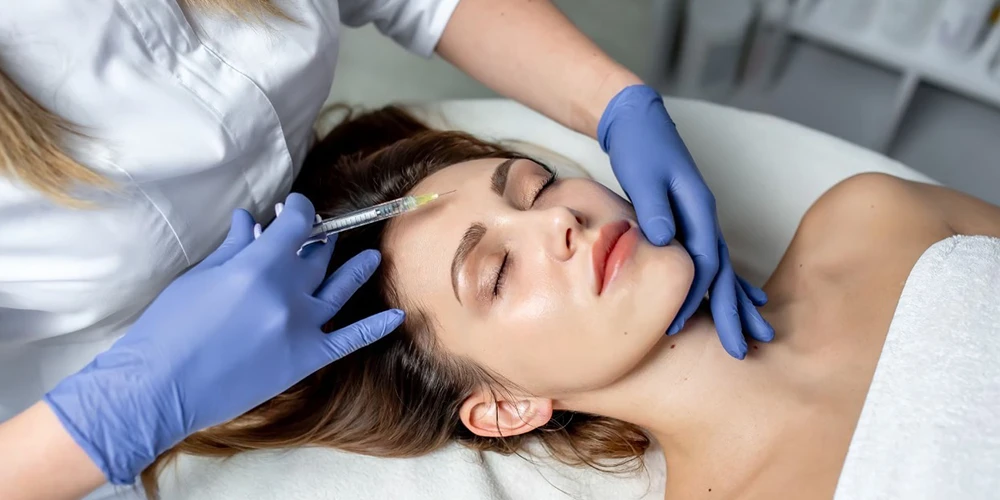
In the standard procedure, a total of 155 units of botulinum toxin are injected at 31 separate sites distributed across 7 muscle groups in the head and neck region. The targeted muscle groups are as follows:
- Forehead (frontalis) — the area above the eyebrows,
- Between the eyebrows (corrugator and procerus) — the area of the vertical line between the eyebrows,
- Temporal muscle (temporalis) — both temples,
- Back of the head (occipital) — the lower back part of the head,
- Neck (cervical paraspinal) — the muscles at the back of the neck,
- Shoulder-back junction (trapezius) — the upper shoulder muscles.
Depending on the patient’s pain pattern, the physician may add additional points to certain areas using the “monitor the pain” approach within the standard protocol. Injections are administered using very fine-gauge needles, and the procedure takes an average of 15–20 minutes. During the procedure, most patients report only a brief, mild pricking sensation; anesthesia is generally not required. This is not a one-time procedure; to maintain its effectiveness, approximately Once every 12 weeks Repetition is essential.
Pre-Treatment Assessment and Preparation
The evaluation prior to a migraine Botox treatment is one of the most critical stages of the process. The doctor takes a detailed medical history to confirm the diagnosis of chronic migraine and determine the patient’s eligibility. At this stage, a headache diary provided by the patient makes a significant difference.
An ideal headache diary should include the following information: the number of days per month when headaches occur, the duration and severity of the attacks, which medications are used and how often, factors believed to trigger the headaches, and the extent to which the attacks affect daily life. In addition, any preventive treatments tried in the past, existing chronic conditions, and medications taken regularly must be shared. This information both supports an accurate diagnosis and makes it possible to objectively measure the effectiveness of treatment over time.
When Does the Effect of Botox for Migraines Begin?
This is the issue patients are most curious about and one that requires honest expectation management. The effects are not immediate; a reduction in the frequency of attacks typically begins to be noticed within 2–4 weeks after the first treatment.
The key point is this: Clinical studies show that the full effect of the treatment usually becomes apparent after the second and third sessions. Therefore, it is important for a patient who does not experience the expected relief during the first session not to discontinue treatment prematurely, but to adhere to the schedule recommended by their doctor. This treatment has a cumulative benefit profile, meaning the benefits build up over time.
The response to treatment varies from person to person. While some patients experience a marked decrease in the number of attack days, a reduction in the severity of attacks, and a decrease in the need for pain relievers, the response may be more limited in others. This method is not a cure that completely eliminates migraines; rather, it is a management tool that helps keep the condition under control. Establishing this realistic framework from the outset lays the foundation for satisfaction with treatment.
After Botox Treatment for Migraines and Possible Side Effects
The procedure does not require a special recovery period; patients can usually return to their daily lives the same day. However, it is recommended to avoid massaging the injection site, bending the head forward for extended periods, and engaging in strenuous exercise for a few hours immediately following the procedure. These precautions are intended to minimize the risk of the toxin spreading beyond the target muscles.
Like all other medical procedures, this treatment also has potential side effects; however, the vast majority of them are temporary and mild:
- Temporary pain, tenderness, or slight bruising at the injection sites,
- Neck pain or a feeling of stiffness in the neck,
- Temporary muscle weakness,
- Rarely, temporary drooping of the eyelid (ptosis),
- Short-term headaches after the procedure in some patients.
The frequency and severity of these side effects are closely related to whether the procedure is performed by an experienced practitioner on the correct anatomical points. A practitioner with a thorough understanding of anatomy can largely prevent unwanted effects by targeting the correct muscle groups. For this reason, “who performs the procedure” is just as critical as “what is being administered.”.
The Difference Between Migraine Botox and Cosmetic Botox
Both treatments use the same active ingredient, namely botulinum toxin type A; however, their purposes, application sites, and dosages differ. Cosmetic Botox aims to soften wrinkles on the forehead, between the eyebrows, and around the eyes by limiting the movement of facial muscles; it is administered in relatively low doses to a small, targeted area.
Bu uygulamada ise hedef estetik bir görünüm değil, nörolojik bir koruma sağlamaktır. Enjeksiyon haritası çok daha geniştir; alından başlayıp şakaklara, enseye, boyna ve omuzlara kadar uzanır. Toplam doz ve nokta sayısı standart bir protokole bağlıdır. Dolayısıyla bir kişinin estetik amaçla botoks yaptırmış olması, migrene yönelik koruma sağlandığı anlamına gelmez; bunlar ayrı endikasyonlar ve ayrı planlamalar gerektiren iki farklı uygulamadır. Kırışıklığa yönelik estetik uygulamalar hakkında bilgi almak isterseniz botoks ile kırışıklık tedavisi sayfamızı inceleyebilirsiniz.
To Get the Best Results from Treatment
The key to maximizing the benefits of treatment is to view it as part of a holistic approach. Adhering to a regular schedule of sessions, continuing to keep track of flare-up days, and evaluating progress together with your doctor form the backbone of the process.
In addition, maintaining a regular sleep schedule, drinking enough water, not skipping meals, and avoiding personal triggers (such as certain foods, excessive stress, or spending long periods of time in front of a screen) as much as possible are habits that support the effectiveness of treatment. This treatment does not replace these lifestyle adjustments; it yields the most meaningful results when used in conjunction with them.
How Is the Migraine Botox Treatment Process Planned?
Treatment is not evaluated based on a single session. Physicians typically assess the response objectively after at least two sessions (a process lasting approximately six months). During this period, changes on days with headaches are tracked using a headache diary. If an adequate response is achieved, treatment is continued at 12-week intervals; if the response remains limited, the doctor reviews the dosage regimen or treatment plan and may implement different preventive options as needed.
The duration of treatment is not determined by a fixed schedule set at the outset. As the condition stabilizes, the intervals between sessions and the need for further treatment are reassessed. This personalized approach aims to both avoid unnecessary treatment and maintain the benefits achieved. Maintaining regular communication with the doctor throughout the process ensures that the plan is updated at the right time.
How Does Botox for Migraines Affect Quality of Life?
The primary benefit expected from treatment is a reduction in the number of headache days experienced per month. A decrease in the number of attack days can lead to indirect improvements, such as reduced use of pain relievers, fewer missed work and school days, more regular sleep, and easier participation in social life. The extent of these benefits varies from patient to patient. For this reason, it is much more reliable to track progress based on recorded attack days rather than on a subjective sense of “feeling better”; concrete data reveals whether the treatment is actually effective.
Is Botox Safe for Migraines?
“The term ”Botox” may cause anxiety in some patients; however, the doses used are medically prescribed and within controlled ranges. Botulinum toxin type A is a molecule that has been used for decades for various medical indications (such as strabismus, muscle spasms, and excessive sweating) and has a extensive safety profile.
When performed under sterile conditions by a physician with a thorough understanding of anatomy, the procedure has a high safety profile. The key factor is the administration of the toxin at the correct sites and in approved doses; this explains why the procedure must be performed in a medical setting by a specialist. It is essential to inform the physician in advance if you have a known allergy, suspect you may be pregnant, or have a neuromuscular disorder.

Frequently Asked Questions
Because very fine needles are used during the procedure, most patients describe only a brief, mild pricking sensation. The procedure is typically completed within 15–20 minutes without the need for anesthesia. It is normal to experience mild tenderness at the injection sites for a few hours after the procedure.
The effects of botulinum toxin diminish over time. For this reason, the treatment is repeated approximately every 12 weeks to maintain its effectiveness. Adhering to a regular schedule is important for maintaining continuous control of seizures.
No. The approved indication for this treatment, supported by scientific evidence, is chronic migraine—that is, a condition characterized by headaches on 15 or more days per month. In episodic migraine, where attacks are less frequent, different treatment approaches are considered first. Determining whether a patient is a suitable candidate depends on the physician’s assessment.
This treatment does not eliminate migraines entirely. Its goal is to make the condition manageable by reducing the frequency and severity of attacks and to improve quality of life. The response varies from person to person and generally becomes more noticeable after a few sessions.
The procedure does not require a special recovery period; patients can usually resume their daily activities the same day. It is recommended to avoid massaging the injection site and engaging in strenuous physical activity for the first few hours after the procedure.
No. Botulinum toxin type A is not an addictive substance. The reason for repeating the treatment is not addiction, but rather the natural decline of the toxin’s effect over time; to maintain the effect, the treatment must be repeated at regular intervals.
In most cases, yes; this treatment can be planned in conjunction with your current acute and preventive medications. However, only your doctor can decide which medications to continue, reduce, or change, based on an assessment of your overall condition. You should not add or stop any medications on your own.
Contact Us
Contact Us Now for Free Consultation and Appointment!
Kronik migren ataklarının günlük hayatınızı kısıtladığını düşünüyorsanız, bu tedavinin sizin için uygun bir seçenek olup olmadığı ancak ayrıntılı bir hekim değerlendirmesiyle netleşir. Medlook’ta süreç, baş ağrısı öykünüzün ve daha önce denediğiniz tedavilerin değerlendirilmesiyle başlar. Uygunluğunuzu öğrenmek ve sorularınızı iletmek için bizimle iletişime geçebilir ve randevu oluşturabilirsiniz.





 Turkish
  English
  German
  French
  Italian