
Are There Scars After Eyelid Surgery (Blepharoplasty)? The Healing Process of Scars and The Art of “Invisible Scars”
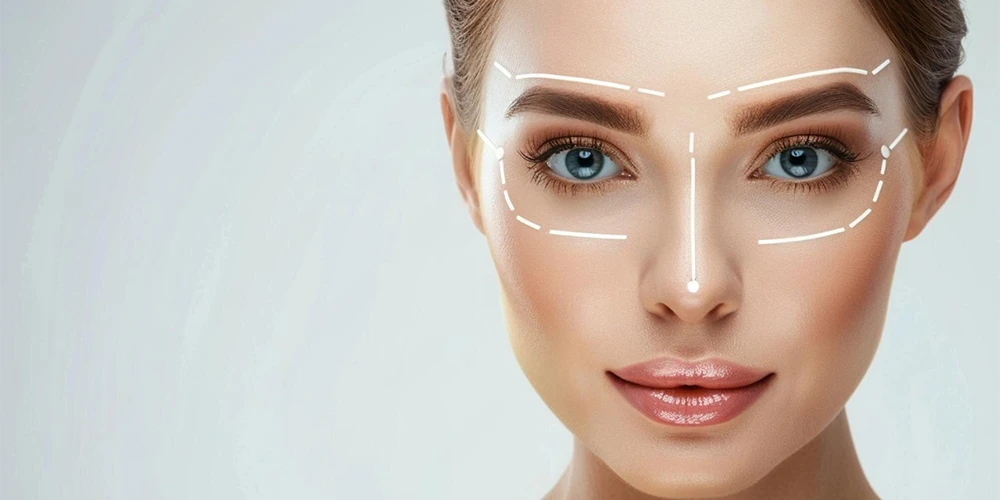
The center of communication, emotion and aesthetics on the human face is unquestionably the eyes. However, time's battle with gravity, our genetic heritage and environmental factors often deal the first blow to this sensitive area. Excess skin that weighs down the upper eyelids, bags on the lower eyelids that give an expression of fatigue... The most effective way to get rid of these problems Eyelid Surgery (Blepharoplasty) However, the biggest fear that haunts patients and even discourages them from surgery is this: “Will I have a scar on my face, over my eyes, that I will carry for the rest of my life?” When seeking an aesthetic improvement, the concern of being left with a noticeable scar is understandable.
The most honest answer to this question is this: “Wherever the scalpel touches, a scar remains, but the art of plastic surgery is to make this scar ‘invisible’.” Eyelid skin is the thinnest and best blood supply skin in the body. This biological advantage, combined with the right surgical technique, makes eyelid surgery one of the least scarless healing procedures. Medlook Polyclinic in Nisantasi, Istanbul In blepharoplasty operations that we perform with the principle of “Invisible Surgery”, we hide the scars in natural anatomical folds and ensure that our patients complete the healing process with minimal scarring. In this comprehensive guide, we will examine where surgical scars are hidden, the biological calendar of wound healing, what to do to fade scars and the factors that prevent the formation of “bad scars” in the light of scientific data, down to the finest detail.
Part 1: The Biological Truth: Why Scarring Occurs and Why the Eyelid is Lucky
When a surgical incision is made, the body produces a “patch” to cover the opening; this is called “scar tissue”. Unlike normal skin, this tissue has a more irregular arrangement of collagen fibers. However, the eyelids are much more favorable for wound healing than the rest of the body:
- Skin Thinness: Eyelid skin is the thinnest skin in the body (about 0.5 mm). There is less tension on the thin skin, which allows the wound to heal as a thin line (hairline scar) without widening.
- High Vascularization (Blood supply): Blood circulation around the eyes is excellent. This means that plenty of oxygen and healing cells (fibroblasts, macrophages) are transported to the wound site. The result is fast and high-quality healing.
Part 2: Where to Hide Scars? Surgical Camouflage Techniques
In a successful blepharoplasty, scars are not “destroyed”, they are skillfully “hidden”. In the techniques we apply at Medlook Polyclinic, the incision sites are planned as follows:
1. Upper Eyelid Surgery: “The Secret Inside the Fold”
The incision in the upper eyelid is not made in a random place. The natural fold line of the eyelid “Supratarsal Fold” in the middle of the night.
- With Eyes Open Since the eyelid is folded, the incision scar remains completely inside the fold and is never visible from the opposite side.
- With Eyes Closed When healing is complete (after 6-12 months), a faint, pale white, fine line remains, which is often mistaken for a natural skin wrinkle.
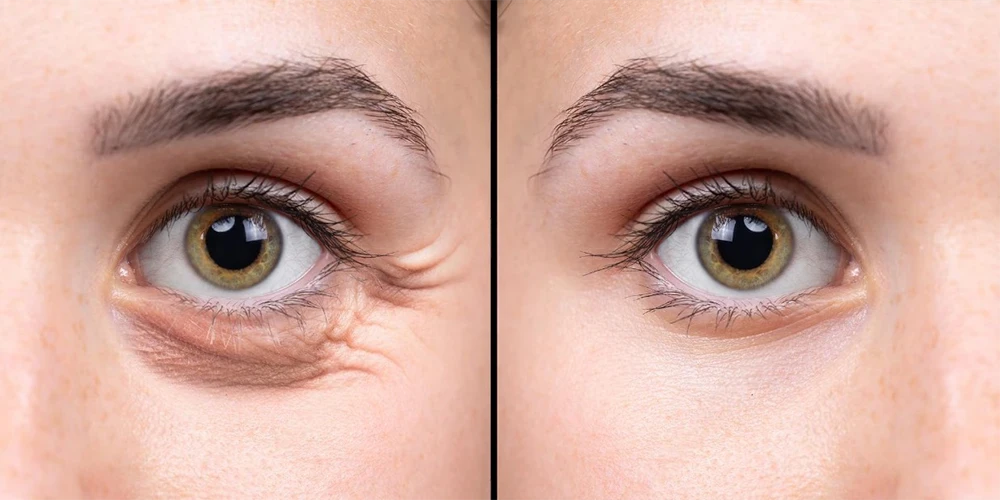
2. Lower Eyelid Surgery: Two Different Ways
The location of the scar on the lower eyelid varies according to the patient's needs:
- Transconjunctival Technique (Scarless Method): If the patient has only fat bags and no excess skin (usually younger patients), the incision is made on the inside of the eyelid (pink mucosa). There are no external incisions, stitches or scars.
- Subciliary Technique (Eyelash Bottom): If excess skin is to be removed, the incision is made 1-2 mm just below the lower eyelashes. This scar remains in the shadow of the eyelashes and disappears over time, blending in with the crow's feet lines.
Section 3: Scars Healing Schedule: What to Expect?
Wound healing is a dynamic process, not a static one. The answer to the question “When will my scar disappear?” is hidden in biological stages.
Stage 1: Inflammation (First 7-10 Days)
Immediately after surgery, the incision site may be red, slightly swollen and crusted. The stitches are still in place during this period.
* Outlook A red/pink line.
* Maintenance: Stitches are usually removed on day 5-7. Early stitch removal is critical to avoid “train tracks” (stitch marks).
Stage 2: Proliferation (2nd week - 3rd month)
The body produces collagen intensively to repair the scar. This is the period when the scar is the most prominent, reddest and sometimes feels slightly hard to the touch (like a cord). Patients are often worried during this phase: “Is my scar not healing?”. However, this is the period when the healing is most active, in other words, when “the scar is working”. Patience should be exercised.
Phase 3: Maturation (3rd month - 1st year)
Collagen fibers are regulated, vascularity is reduced. The red scar gradually begins to fade, turn pink and eventually turn to skin color or pearlescent white. This is the phase when the scar softens and integrates with the skin. At the end of the 1st year, the scar takes its final form.
For detailed scientific studies on wound healing and scar formation mechanisms in skin surgery Article in the National Institutes of Health (NIH) database you can examine.
Section 4: Factors Determining Trace Quality: Why Are Some Traces More Distinctive?
Even if the same surgeon operates on two different patients with the same technique, the scars may heal differently. The reasons for this are the following:
1. Genetic inheritance and skin type
- Fitzpatrick Skin Type: Dark-skinned patients (Fitzpatrick IV-VI) are more prone to hyperpigmentation (darkening of the scar). In fair-skinned patients, scars fade more quickly but redness may last longer.
- Keloid Tendency: The formation of keloids (raised scars) on the eyelid is extremely rare. However, caution should be exercised in patients with a history of poor wound healing.
2. Surgical Technique and Precision
Tissue-respecting surgery (atraumatic technique) determines the fate of the scar. Excessive use of cautery (burning device) burns the tissue and impairs healing. At Medlook Polyclinic, tissue damage is minimized by using micro-surgical instruments and very fine suture materials.
3. Patient Factors: Smoking and Sun
- Cigarette: Nicotine narrows the blood vessels (vasoconstriction) and prevents oxygen from reaching the wound site. Wound healing is delayed and scars may remain more prominent in patients who smoke.
- Solar (UV) Rays: A fresh scar (while still red) will darken (pigment) permanently if exposed to the sun. Sun protection is essential for the first 6 months.
Section 5: What to Do to Minimize Scars (Scar Management)
After the surgery, your surgeon's task ends and your task begins. You can follow this protocol to fade your scars:
1. Silicone Gel and Tapes (Gold Standard)
After the stitches have been removed and the scabs have fallen off (around week 2-3), starting to use silicone-containing scar gels keeps the scar moist and prevents it from swelling (hypertrophy). It is the most effective topical treatment scientifically proven.
2. Scar Massage
After week 3, gently massaging the scar in a circular motion softens the underlying hardness (fibrosis) and speeds up lymphatic drainage. This allows the scar to heal flatter and softer.
3. Sunglasses and SPF
İyileşme sürecinin ilk yılında, dışarı çıkarken geniş çerçeveli güneş gözlüğü takmak ve izin üzerine (göze kaçırmadan) stik formunda güneş koruyucu sürmek, izin kararmasını %100 önler.
4. Laser Treatments (if necessary)
If the scar is still redder or more prominent than expected at the end of the 6th month, the scar color can be lightened and the texture smoothed with Fractional Laser or IPL treatments. However, this is rarely needed in eyelid surgeries.
Section 7: Medlook Polyclinic Istanbul Nişantaşı Difference
Eyelid aesthetics is a millimetric engineering. Istanbul Nisantasi‘located in the center of Medlook Polyclinic as:
- Aesthetic Stitching We stitch under a microscope or with magnifying glasses (loops). The threads we use are thinner than a hair.
- Personalized Planning: We provide a natural camouflage by planning the incision line according to the patient's existing wrinkles.
- Recovery Tracker: We monitor postoperative scarring and manage the process with free laser or injection interventions when necessary.

Frequently Asked Questions (FAQ)
When will the scars disappear completely?
Medically, no scar will completely “disappear”. However, eyelid scars become “invisible” after 1 year. In other words, it turns into a thin white line that can only be seen when viewed very closely and carefully, without makeup.
When can I cover it with makeup?
You can apply concealer or foundation 2-3 days after the stitches are removed (on average day 10), when the incision line is completely closed. This speeds up the return to social life.
Will there be cysts or white spots (Milia) at the incision site?
Sometimes tiny white fat cysts called “milia” can form on the suture line. These are harmless and can be removed within seconds in an outpatient clinic.
Will my eyes stay open after eyelid surgery?
This is a complication called “lagophthalmos” and is caused by excessive skin removal. This risk does not exist in an operation planned by an experienced surgeon with accurate measurements. In the first weeks, a slight gap may remain due to edema, this is temporary.
Act on Knowledge, Not Fear
The scar that will remain after eyelid surgery is a negligible detail compared to the young, vigorous and bright looks you will gain. In the right hands, in a surgery performed with the right technique, these scars become so faint that no one (sometimes even you) can notice them. To leave your tired looks behind and make peace with mirrors Medlook Polyclinic with its expert Plastic Surgeon staff in Nişantaşı, Istanbul Get acquainted. Get in touch now to learn about your personalized recovery plan and expected results. Start the change with a free initial consultation appointment.











 Turkish
  English
  German
  French
  Italian