

How Much Do Things Change Before and After a Hair Transplant?
 Dr. Handan YavuzUpdated 6 min read
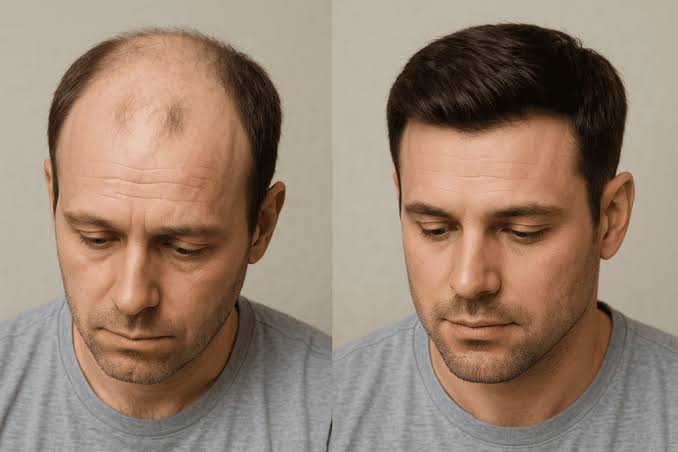
When deciding on a procedure, the most common question is how noticeable the result will be. The hair transplant before and after difference emerges over months with proper planning and patient recovery. The appearance in the first days does not reflect the final result. The real change becomes clear only over a timeline of up to a year.
In this article, we cover the whole change, from the preparation beforehand to the recovery stages afterward. The aim is to help you set a realistic expectation. This way, you know in advance what you can see in which month. We explain each stage in plain language.
Highlights
- The appearance in the first days does not reflect the final result; the real change takes months.
- Photo comparison shows progress objectively.
- Graft count and distribution directly affect how noticeable the change is.
- New hair emerges after the 4th month, and the natural look settles at the 12th month.
- Satisfaction is reported at nearly 90% among patients with realistic expectations.
What Changes Before and After a Hair Transplant?
Before the procedure, the picture is a thinned area or a receded hairline. When comparing a hair transplant before and after, the most noticeable difference is seen in coverage and density. However, this difference forms over months, not in a single day. In the first weeks, the appearance may remain close to how it was before the procedure.
The new hair that grows over time gradually fills the area. The hairline becomes more defined, the crown becomes denser, and the facial expression looks refreshed. With proper planning, this change is natural and balanced. The result is a look that has blended with the person's own hair.
What Is Done Beforehand?
Preparation before the procedure directly affects the quality of the result. Blood-thinning medications and supplements are shared with the doctor. Alcohol and smoking are reduced or stopped a few days beforehand. A photographic record is kept to compare progress.
Discussing expectations openly sets a realistic goal. The hairline and graft plan are clarified at this stage. Good preparation shows you in advance what you will encounter throughout the day. This way, you start the process more comfortably.
- Informing the doctor about blood-thinning medications and supplements,
- Reducing alcohol and smoking a few days beforehand,
- Discussing expectations openly and clarifying the goal,
- Determining the hairline and graft plan,
- Taking detailed photos for comparison.
How Do the First Days Look Afterward?
Right after the procedure, there is redness and small scabs in the transplanted area. This appearance is temporary and clearly subsides within a week. As the scabs fall off, the skin returns to its normal appearance. In the first weeks, some of the transplanted hairs may shed temporarily.
This early period can be misleading because it does not reflect the final result. At times the appearance may seem to have returned to how it was before the procedure. It is necessary to trust the process without panicking. The real change begins after the fourth month.
- Day 1: redness and small scabs appear,
- Days 2-3: the first wash is done, mild swelling may descend,
- Week 1: the scabs fall off, the skin returns to normal,
- Weeks 2-4: the appearance may remain close to pre-procedure,
- End of month 1: recovery is complete, the waiting begins.
Why Is Photo Comparison Important?
Photo comparison is the best way to measure progress objectively. Because change appears slow in everyday viewing, it may go unnoticed. Photos taken from the same angle and in the same light reveal the real progress. For this reason, keeping regular photos is recommended.
Comparison both increases motivation and makes follow-up easier. The doctor also evaluates the process through these photos. An objective record reduces unnecessary anxiety. Seeing the change also strengthens patience.
How Does Graft Count Affect the Result?
The graft count is determined by the size of the area to be covered and the desired density. More grafts provide a fuller result in large areas. However, the number is limited by donor capacity and must be used in a balanced way. The goal is not the highest number but a natural distribution.
The same graft count can produce different results depending on distribution. A properly planned distribution looks full even with a small number. For this reason, the number is not the only factor that determines the result. Planning and technique are at least as important as the number.
- The width of the area to be covered and the current density,
- The healthy follicle capacity of the donor area,
- Distributing the grafts evenly across the areas,
- Hair strand thickness and natural density,
- Planning carried out with long-term hair loss in mind.
What Are the Recovery Stages Month by Month?
The first four weeks are usually spent with the scabs falling off and the skin recovering. The following few months are a quiet period in which temporary shock loss is seen. From the fourth month, new hair gradually comes to the surface. This rhythm does not progress at the same speed for everyone; it varies according to hair structure.
Toward the eighth month, the density in the area visibly increases. By the twelfth month, the result largely takes its final form. To support the process, our publications on results and timelines are worth a look. Waiting patiently allows the most realistic assessment.
- Month 1: scabbing passes, the skin returns to normal,
- Months 2-3: temporary shock loss may be seen,
- Months 4-6: new hair emerges and grows out finely,
- Month 8: density becomes noticeable, the look begins to settle,
- Month 12: the result becomes largely clear.
When Does the Natural Look Settle?
The natural look forms as the transplanted hairs blend with your own hair. This blending becomes more pronounced as density increases and the hairs grow longer. It usually becomes noticeable from the eighth month. Full settling takes up to a year.
The key to naturalness is care in hairline design and transplant angle. A well-planned result is so natural that those around you will not notice. For this reason, you should not jump to hasty conclusions in the early period. With patience, the result reaches its best form.
- The transplanted hairs growing longer and thickening over time,
- The coverage becoming more noticeable as density increases,
- The hairline design blending with the existing hair,
- A natural pattern forming under light and combing,
- The look beginning to settle from the eighth month.
Why Is Expectation Management Necessary?
Realistic expectation is the most important determinant of satisfaction. Donor capacity and hair structure limit the achievable result. Knowing these limits from the start prevents disappointment. A good doctor clearly explains what is possible.
It is wise to be cautious about exaggerated promises. The result is the best that is possible with the person's own resources. The right expectation also makes the process easier. A goal set with knowledge brings real satisfaction.
Contact Us
Contact Us Now for Free Consultation and Appointment!
What Factors Affect the Result?
The result depends on personal factors as much as on technique. Donor quality, hair structure and general health are decisive. Compliance with instructions and lifestyle habits also have an effect. When these factors come together, the final appearance takes shape.
Patience and regular follow-up improve the quality of the result. Smoking and irregular nutrition, on the other hand, can slow healing. Each factor makes a small contribution to the before and after difference. A holistic approach brings the best result.
- The quality and capacity of the donor area,
- Hair strand thickness and skin contrast,
- General health and lifestyle habits,
- Compliance with post-procedure instructions,
- Patient and regular follow-up.
Before and After Change Table
The table below summarizes the expected change by month.
| Period | View | Expectation |
|---|---|---|
| Before the procedure | Sparse, receded | Planning is carried out |
| First week | Redness, scabs | Care with patience |
| Months 1-3 | Shock spill | Do not panic |
| Month 8 | Noticeable thickening | The look settles |
| Month 12 | Natural result | Lasting appearance |
For an overview, you can read our How is Hair Transplantation Done? guide and, for the topic of grafts, how many grafts for a hair transplant article; for other topics, you can browse our hair transplant category.
A realistic before and after assessment for your own situation is carried out at Medlook Private Clinic. For any questions, please feel free to you can contact.
Author: Dr. Handan Yavuz, Medical Aesthetics Specialist. This content has been prepared for people curious about the changes before and after a hair transplant.
Frequently Asked Questions (FAQ)
When Does the Hair Transplant Before and After Difference Become Visible?
A noticeable difference begins after the fourth month and settles at the twelfth month. The appearance in the first weeks does not reflect the final result. For this reason, patience is needed for the assessment.
Why Is a Photo Record Recommended?
Photos taken from the same angle and in the same lighting show progress that goes unnoticed in everyday viewing. The doctor also evaluates the process through these photos. An objective record supports both follow-up and motivation.
Does the Appearance Worsen in the Early Period?
Because of shock loss, the appearance may temporarily seem to have gone backward in the first months. This is normal, and most of the shed roots grow back. The real change is seen in the following months.
Does a Higher Graft Count Mean a Better Result?
Not always. A balanced distribution can look full even with a small number. What determines the result is planning and technique as much as the number. Donor capacity also sets the limit of the number.
Does the result look natural?
With the right hairline design and transplant angle, the result looks quite natural. The transplanted hairs blend with your own hair and go unnoticed. The key to naturalness is care in planning.
Is the result permanent?
Because the transplanted follicles are taken from an area resistant to hair loss, they are permanent. However, the shedding of the surrounding existing hair requires separate follow-up. A holistic plan preserves the long-term appearance.
Can’t find your question here?Send us what you would like to know and our team will get back to you.
WhatsAppYou May Also Like
NoMor or Light Filler? 5 Differences Under the Eyes
NoMor or light filler for the under-eye area? Compare the purpose and effect of both methods, and which type of dark circle each suits, from an expert perspective.
PRP Prices 2026: What Do They Depend On?
What do PRP prices depend on, and which factors determine the cost? We explain, from an expert's perspective, how the number of sessions, kit type and treatment area affect the 2026 price.
How Many Sessions of Hair PRP? Procedure and Aftercare 2026
What is hair PRP, how does it work against hair loss, and who is it for? We cover the use of plasma prepared from a person's own blood for hair.
 Turkish
 English
 German
 French
 Italian