
The Road to a Hollywood Smile: A Comprehensive Guide to Smile Design and Aesthetic Perfection
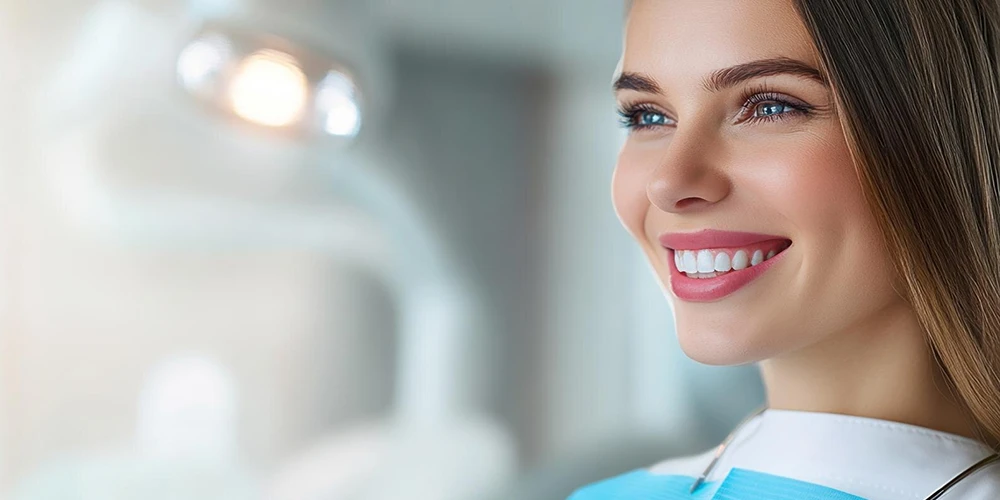
Communication starts long before words. When you walk into a room, meet someone or freeze at a photograph, the first and most powerful signal you give to the other person is your “smile”. Psychological research proves that after the eyes, the teeth are the first thing people notice about the person they meet. A confident, symmetrical and bright smile is not only an aesthetic advantage, but also a universal symbol of social status, health and positive energy. Unfortunately, not everyone is born with perfect teeth. Genetic factors, tetracycline group antibiotics used in childhood, heavy coffee/tea consumption, abrasions caused by teeth clenching (bruxism) and the natural aging process shade the sparkle of our smile over time. At this point, the artistic face of modern dentistry “Hollywood Smile” it comes into play.
Contrary to popular belief, the Hollywood Smile is not just about “white and straight teeth”. It is the redesign of the tooth form that best suits the person's facial features, lip structure, skin color and even character, within the framework of the golden ratio rules. Just as an architect designs a building, a dentist designs a smile; however, the bricks used here are porcelain and the cement is glitter. Medlook Polyclinic in Nisantasi, Istanbul as, smile designnı bir “diş tedavisi”nin ötesinde, kişinin yüzüne imzasını atması ve potansiyelini ortaya çıkarması olarak görüyoruz. Bu kapsamlı rehberde, Hollywood Gülüşü’nün anatomisini, Yaprak Porselen (Lamina), E-max ve Zirkonyum gibi materyallerin farklarını, dijital tasarım sürecini (DSD) ve hayalinizdeki gülüşe giden 7 günlük yolculuğu, 1200 kelimeyi aşan detaylı bir analizle sunuyoruz.
Part 1: What is the Hollywood Smile? The Math, Art and Science
The term Hollywood Smile was first coined in the 1930s in California when movie stars wore temporary veneers on their teeth during filming, and today it has become the pinnacle of permanent and natural aesthetics. However, a successful design requires millimetric calculations and respect for facial anatomy, not randomly whitened teeth.
Golden Ratio (Phi Number) and Visagism
The Golden Ratio (1.618), the mathematical equivalent of perfect beauty in nature, is also valid in dental aesthetics. In aesthetic dentistry, these proportions are applied as follows:
- Ratios Önden bakıldığında üst ön iki keser dişin (santral) genişliği ile yan keser dişlerin (lateral) genişliği arasında belirli bir matematiksel oran (yaklaşık %62) olmalıdır. Bu oran bozulduğunda göz, estetik bir hata algılar. Diş estetiğinde altın oranın önemi üzerine yapılan bilimsel çalışmalar, bu dengenin çekicilik algısındaki rolünü doğrulamaktadır. Konuyla ilgili detaylı bilimsel veriler için “Golden Ratio and Dental Aesthetics” in the National Institutes of Health (NIH) database” You can review the article.
- Smile Line: The imaginary line connecting the cutting edges of the upper teeth should be parallel to the curve of the lower lip. This harmony adds a youthful and dynamic expression to the smile. A straight smile line makes a person look old, while a curved line is a sign of youth.
- Visagism (Confrontation): The tooth form is chosen according to the character of the person. For example; rounded (oval) teeth give a more feminine, soft and maternal expression, while angular and straight teeth create a more masculine, dominant and strong expression.
Chapter 2: Materials Used: Which one is right for you?
There is no “one right” in smile design. Different materials are used according to the patient's tooth structure, bite (occlusion), parafunctional habits (clenching, etc.) and aesthetic expectations. The world-class materials we use most frequently at Medlook Polyclinic are as follows:
1. Porcelain Lamina (Leaf Porcelain / Veneers)
It is considered the “Ferrari” of aesthetic dentistry.
- What is it? Fingernail-thick (0.3 - 0.5 mm), very thin porcelain sheets with high fluorescence, whose light transmittance is similar to natural teeth.
- Implementation: It is integrated into the tooth with special resin adhesives with very little (sometimes no) abrasion (Minimally Invasive) only on the front surface of the tooth.
- For Whom? It is ideal for those with mild crowding, discoloration, gaps (diastema) or fractures. It is the method that preserves the original structure of the tooth the most.
2. E-max (Full Ceramic) Coatings
Made of reinforced lithium disilicate ceramic. There is no metal or zirconium substrate inside.
- What is it? It is the material with the highest light transmittance. Also known as “glass ceramic”. It is the material that best mimics the transparency of natural tooth enamel.
- For Whom? It is used especially for those who want maximum aesthetics in the anterior teeth. It is excellent in making individual crowns (veneers). However, in very long bridges, the fracture resistance may not be as high as zirconium.
3. Zirconium Veneers
It is the meeting point of aesthetics and durability. It is obtained by processing porcelain on a white metal zirconium oxide substrate.
- What is it? Although the light transmittance is not as high as lamina or E-max, it is much more aesthetic than the old metal-backed porcelain. It has very high biocompatibility, blends perfectly with the gums and never reflects gray (metal reflection).
- For Whom? In the back group teeth, bridges with missing teeth or teeth that are very damaged, canal treated and excessively darkened in color Zirconium is preferred because it has a high opacity to mask the underlying dark color. For more information on durability comparisons of dental ceramics Material research on PubMed you can take a look.
Section 3: Not Without “Pink Aesthetics” (Gingivoplasty)
If you put a white painting (teeth) in a crooked and unhealthy frame (gums), it will not be pleasing to the eye, no matter how beautiful the painting is. The secret hero of the Hollywood smile is the gums. Healthy gums should be light pink in color, have an orange peel appearance and not bleed.
- Gummy Smile (Gummy Smile): It is a condition where the gums appear too much (more than 3-4 mm) while laughing. This can make a person look more childish than they really are. With a simple procedure (Gingivectomy) using a diode laser or surgical method, the gums are leveled up and the teeth are lengthened.
- Asymmetry If the gum levels are incompatible (for example, the right tooth has a lower gum), the tooth lengths appear different. With pink aesthetics, these levels are equalized (Zenit point regulation). For detailed information about gum health and aesthetic procedures American Academy of Periodontology (AAP) You can access it on the website.
Section 4: Step-by-Step Hollywood Smile Process
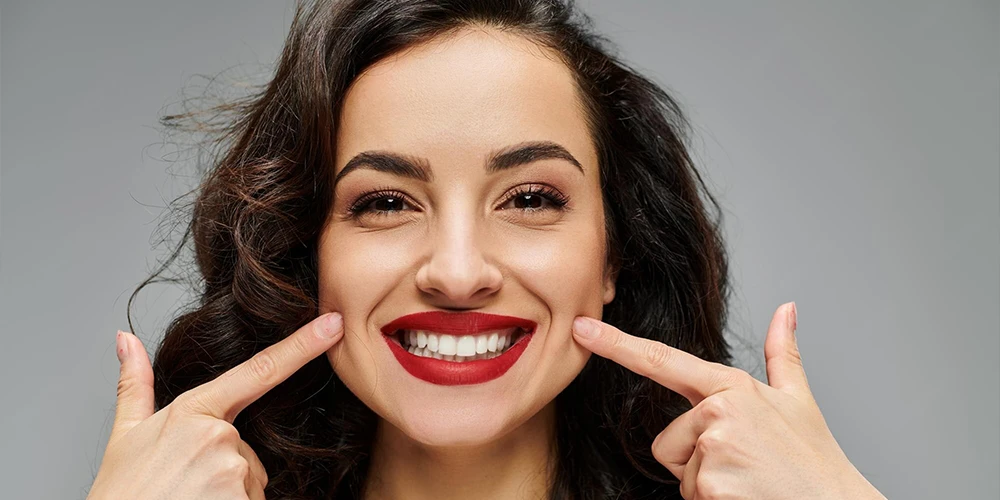
The protocol we apply at Medlook Polyclinic is a digital workflow that leaves no room for error. The process usually takes 5 to 7 days and the patient spends this process like a “beauty vacation”.
Day 1 Consultation and Digital Photography
It all starts with a conversation. We listen to your expectations. Then your face, smile and intraoral photos are taken under professional studio lights. Your measurements are taken with digital scanners (3D Intraoral Scanner). Traditional, nausea-inducing “dough” measurements are now history in our clinic.
Day 2 Mock-Up Session - “Test Drive”
This stage is the most exciting and reassuring part for our patients. You have not yet without any action, dijital tasarımın bir kopyası (Mock-up), geçici bir materyalle (bis-akrilik) dişlerinizin üzerine uygulanır. Aynaya baktığınızda, finalde nasıl görüneceğinizin %90’ını kendi ağzınızda görürsünüz. “Dişlerim çok mu uzun oldu?”, “Rengi nasıl duracak?” gibi soruların cevabı bu seansta verilir ve tasarım üzerinde anlık revizyonlar yapılır.
Day 3 Preparation (Prep)
Teeth are prepared according to the design you have approved. If a lamina is to be applied, only 0.3 mm of abrasion is performed on the front surface, and if a veneer is to be applied, abrasion is performed all around. No pain is felt as it is performed under local anesthesia. At the end of the session, your temporary teeth are fitted according to the mock-up design. In other words, you will not leave the clinic without teeth and you can continue your social life.
Day 4 - 6 Laboratory Art
Your impressions are sent to the laboratory. The infrastructure of the teeth is prepared with CAD/CAM technology. Then our ceramists (dental technicians) work on the teeth like a sculptor. Color transitions, transparency effects, mamelon structures and surface texture are given at this stage. In order for the tooth to look “natural”, it should not be a single color (opaque white), and the tips should be slightly transparent and bluish.
Day 7 Final and Cementation
Your porcelain arrives. They are first tried on with temporary adhesive or special try-in paste. Color, form and closure are checked for the last time. When you say “Yes, that's it!”, it is permanently bonded to the teeth with special resin cements (very strong adhesives that harden with light). Now you can say hello to the world with your new smile.
Section 5: Choosing a Color: “All White” or “Natural White”?
The “ice white” (Bleach White) shades (BL1, BL2) that come to mind when it comes to the Hollywood smile may not be suitable for everyone. The choice of color is a personal preference, but some rules should be observed.
- Skin Color Matching: Very white teeth can sometimes look artificial on dark-skinned people due to the contrast, while they look more natural on fair-skinned people.
- The Whites of the Eye Rule: Ideal tooth whiteness should be close to the white part of the eye (sclera). Teeth that are whiter than this steal attention away from the eyes and focus it only on the mouth.
- Trends In recent years, with the “Natural Hollywood” trend, natural white (A1, B1) shades with transparent ends and light texture are more preferred. Medlook experts will help you choose the most suitable shade for you on the VITA color scale.
Chapter 6: Maintenance and Lifespan: Protect Your Investment
Smile Design It is an investment for life but requires maintenance like your car.
- Night Record: If you suffer from teeth clenching (bruxism), the use of night plates is essential to protect the porcelain.
- Mouth Shower The use of a mouthwash is recommended to clean the interfaces where the brush cannot reach and to maintain gum health.
- Prohibited Actions: Traumatic movements such as breaking nuts, opening packages or biting pens with the front teeth should be avoided. Porcelain does not rot but can be broken by trauma. For general advice on the care of porcelain veneers American Dental Association (ADA) - MouthHealthy page for more information.
Section 7: Medlook Polyclinic Istanbul Nişantaşı Difference
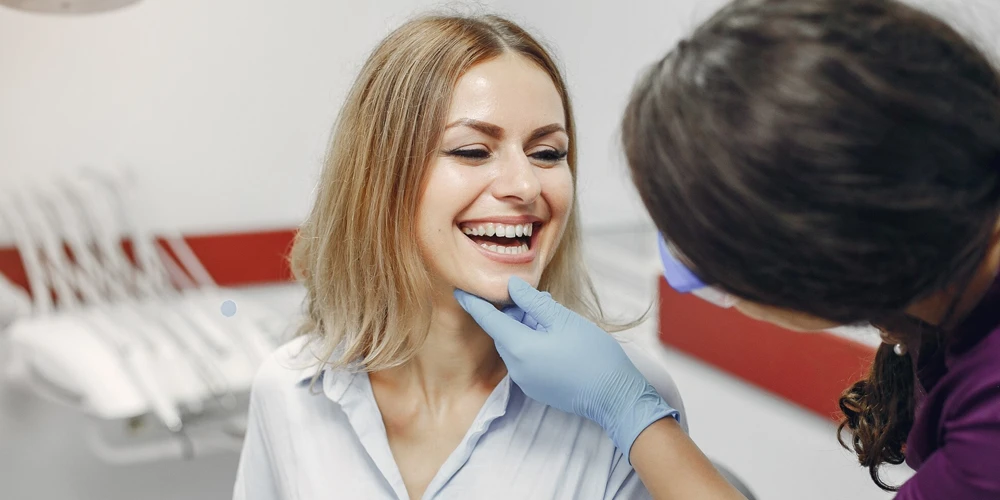
The Hollywood smile is the art not only of the dentist but also of the dental technician. It is a team work. Istanbul Nisantasi‘located in the fashion and aesthetic center of Medlook Polyclinic as:
- Multidisciplinary Approach: Aesthetic Dentist, Periodontologist (Gum Specialist) and Prosthesis Specialist evaluate the cases together.
- Premium Materials: We use only certified, world brand porcelain blocks (Ivoclar Vivadent, etc.) and cements.
- Tourism and Comfort: For our patients coming from out of town or abroad, we turn the process into a holiday with VIP transfer and accommodation organization.
Frequently Asked Questions (FAQ)
Do I have to cut all my teeth?
No. For a Hollywood smile, teeth that are visible on the smile line (8-10 teeth in the upper jaw and 8-10 teeth in the lower jaw) are usually treated. In addition, if Lamina (Leaf) porcelain is preferred, the abrasion made from the tooth is minimal, sometimes no abrasion is made (Non-prep).
Will I feel pain during the procedure?
All procedures are performed under local anesthesia, so you will not feel pain during the procedure. For a few days after the procedure, there may be cold-hot sensitivity in the teeth, which is temporary and passes with simple painkillers.
Will tea, coffee or cigarettes yellow my veneers?
The surface of high quality porcelain (E-max, Zirconium, Lamina) is like highly baked glass and is polished (glazed). It is not porous like natural teeth. Therefore, it does not stain or change color. Even after 15 years, it retains its first day whiteness.
Does it cause bad breath?
If the veneers are made in full harmony with the gums (if the biological interval is maintained) and the patient pays attention to oral hygiene (flossing), porcelain teeth will never cause odor. Odor usually occurs in poorly made veneers with a “bridge body” that presses on the gums and cannot be cleaned at the interface.
Don't Postpone Your Radiance
Your smile is the most valuable business card you present to the world. Displaying it with confidence instead of hiding it will open doors in every aspect of your life. The Hollywood smile is not an unattainable dream; it is a reality that can be realized in 1 week with the right planning, the right choice of materials and expert hands. With the expert staff of Medlook Polyclinic in Nişantaşı, Istanbul Contact us now to meet, get your digital smile design done and reveal your potential. Take the first step to your dream smile with a free pre-consultation appointment.





 Turkish
  English
  German
  French
  Italian