

Which Vitamin Deficiency Causes Hair Loss?
 Dr. Handan YavuzUpdated 6 min read
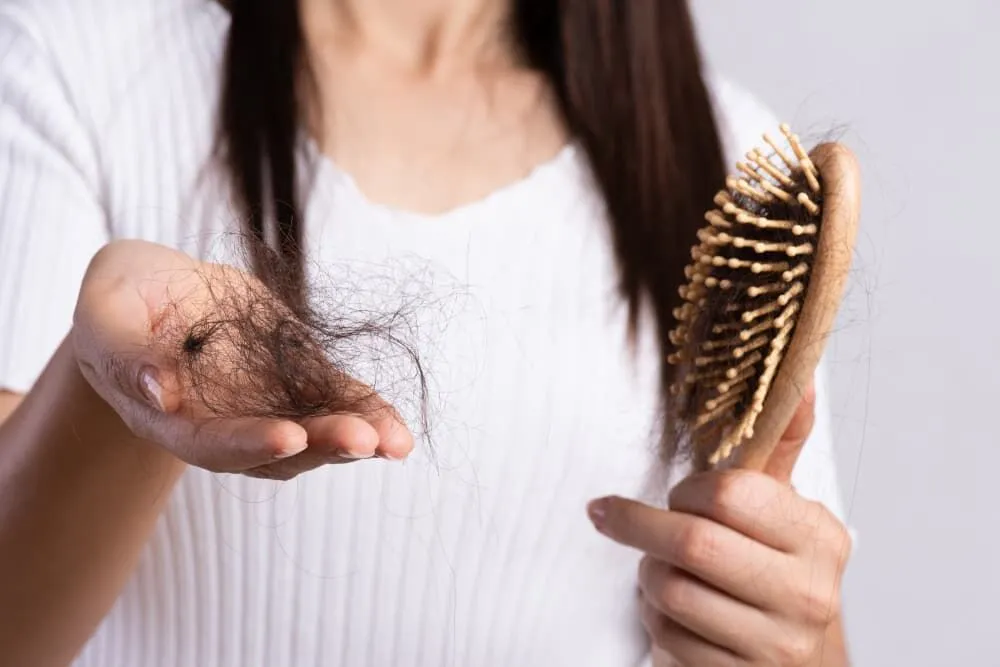
When your hair starts to thin, one of the most common questions is this: which vitamin deficiency is linked to hair loss? Because hair is made of rapidly dividing cells, it is sensitive to nutritional gaps. A drop in iron, vitamin D, zinc and some B vitamins is one of the grounds that make shedding easier.
However, not every case of hair loss can be explained by a deficiency, which is why it is better to measure than to guess. In this article, we explain in plain language which values are linked to hair, which tests are useful, and when supplements make sense. Our aim is not panic, but accurate information.
Highlights
- Iron, vitamin D, zinc and B12 are the values most commonly associated with hair health.
- In a significant share of hair loss cases in women, low ferritin stands out; in some studies the rate exceeds 30%.
- Biotin deficiency is rare in the general population; unnecessary high-dose use can distort test results.
- Supplements make sense only if a deficiency has been proven by a blood test and they are taken under supervision.
- Once the deficiency is corrected, this type of hair loss usually resolves within a few months.
Which Vitamin Deficiency Is Linked to Hair Loss?
When you look at which vitamin deficiency is linked to hair loss, the list is short but important. The values most often blamed are iron, vitamin D, zinc and B12. Beyond these, insufficient protein intake also directly affects hair.
What matters is to see which of these values is actually low. The same symptom can stem from different deficiencies. That is why the right approach is to assess the whole picture with tests instead of blaming a single vitamin.
Why Are Iron and Ferritin Critical?
Iron and ferritin are among the most talked-about values in hair health. Ferritin reflects the body’s iron stores, and when it is low, the number of strands in the growth phase can decrease. This is a common underlying factor, especially in women who menstruate.
Ferritin can be low even when the blood count looks normal, so it is important to check it separately. Because refilling the stores can take months, patience is needed. Iron supplementation, in turn, must always be planned on a doctor’s advice and at the right dose.
Does Vitamin D Deficiency Affect Hair?
Vitamin D deficiency is associated with the mechanisms that support the hair follicle cycle. Low levels are seen more often in some types of hair loss. This deficiency is common in people who do not get enough sun.
Still, vitamin D alone is not the cause of every case of hair loss. A simple blood test is enough to see the level. If a deficiency is detected, replacing it is also a useful step for general health.
Zinc Deficiency and Its Relationship with Hair
Zinc deficiency is another value linked to hair loss. This mineral plays a role in the repair and growth of the hair follicle. Unbalanced nutrition and some absorption problems can lower zinc levels.
With zinc, both deficiency and excess intake can cause problems, so uncontrolled use is not advisable. The need is determined by the blood value and diet. Red meat, seafood and nuts are good sources.
Is Biotin Deficiency Really a Problem?
Contrary to what advertisements suggest, biotin deficiency is quite rare in the general population. A true biotin deficit is seen very rarely in people who eat a balanced diet. For this reason, recommending biotin to everyone has no scientific basis.
High-dose biotin also calls for caution because it can mislead the results of some blood tests. It is important to tell your doctor about its use before testing. If there is no real deficiency, no noticeable benefit for hair should be expected from biotin.
Do B12 and Folate Deficiencies Have an Effect?
B12 and folate indirectly affect the hair cycle because they take part in cell renewal. Low B12 can be seen especially in people on a mostly plant-based diet. These deficiencies also show themselves through other symptoms such as fatigue.
The values are determined with simple blood tests and replaced when necessary. You can find the general causes of hair loss in our hair loss in women article. A proper assessment requires seeing the whole picture without fixating on a single vitamin.
Which Tests Should Be Done?
The right approach is to measure instead of guess. A complete blood count, ferritin, vitamin D, zinc, B12 and thyroid values are commonly requested tests. This panel largely clarifies whether the hair loss is related to nutrition.
Test results should be interpreted together with symptoms, not on their own. Those curious about the scientific framework can review the publications on this topic for themselves. Choosing the right tests also prevents unnecessary supplementation.
When Are Supplements Needed?
Supplements make sense only when a deficiency has been proven by testing and they are taken under a doctor’s supervision. Vitamins taken without a deficiency provide no benefit and, in some cases, even build up in the body. That is why taking supplements with a “just in case” mindset is not the right approach.
The right dose and duration are determined by which value is low and by how much. As the deficiency is corrected, hair loss mostly recedes. Follow-up values also decide when to stop the supplement.
How Can Hair Be Supported Through Nutrition?
The safest source of vitamins and minerals is a balanced plate. Red meat, eggs, leafy greens, legumes and seafood support the values associated with hair. Variety is more effective than relying on a single food.
Strict diets and monotonous eating can show up in the hair within a short time. Enough water and regular meals complete the picture. If hair loss continues even after nutrition has been corrected, another cause should be considered.
Why Are Thyroid Values Requested?
When the thyroid gland is underactive or overactive, the hair cycle is directly affected. That is why thyroid tests are often requested when assessing hair loss. Thyroid-related hair loss is usually diffuse and appears together with other symptoms such as fatigue and weight changes. When the underlying problem is resolved, the hair mostly recovers as well.
Although the thyroid is not a vitamin, it is a balancing factor that affects hair health as much as nutrition does. To see the general causes of hair loss as a whole, you can read our What Causes Hair Loss? article and look at the whole picture instead of a single value. That is why thyroid values should not be overlooked alongside the vitamin panel.
Are Values Such as Selenium and Copper Important?
Trace elements such as selenium and copper also play a role in hair structure. Marked imbalances in these values can, although rarely, contribute to hair loss. However, they are not checked routinely in everyone; they are assessed at a doctor’s request when needed. In people who eat a balanced diet, a deficit in these elements is generally not seen.
With selenium in particular, excessive intake can do more harm than good. For this reason, uncontrolled supplementation of such minerals is not advisable. If there is a need, the right dose is determined based on the blood value. Eating a varied and balanced diet is the safest source for most trace elements.
Contact Us
Contact Us Now for Free Consultation and Appointment!
Is Excessive Vitamin Intake Harmful?
Just as vitamins are beneficial, the harm of taking too much should not be overlooked. Fat-soluble vitamins in particular can build up in the body and cause unwanted effects. Even some excesses, such as high-dose vitamin A, can trigger hair loss. In other words, the logic of “the more, the better” does not apply here.
For this reason, the decision to take a supplement should be based on tests, not personal guesses. Raising a value that is not deficient brings no benefit and can upset the balance. The right approach is to replenish only what is truly low, at the right dose. Controlled use protects both safety and results.
Summary of Hair-Related Values
The table below briefly summarizes the values most commonly associated with hair loss.
| Value | Role | Commonly Affected Group | Source |
|---|---|---|---|
| Ferritin (iron) | Supports the growth phase | Women who menstruate | Red meat, legumes |
| Vitamin D | Linked to the follicle cycle | Low sun exposure | Fish, sunlight |
| Zinc | Repair and growth | Unbalanced nutrition | Seafood, nuts |
| B12 | Cell renewal | People on plant-based diets | Meat, eggs, milk |
Those who want to see all the causes in one place can browse the content in our hair loss category to browse its content. Which value stands out can only be determined through personalized tests.
To plan the right tests for your hair, an assessment is carried out at Medlook Private Clinic. For your questions, with us you can contact.
Author: Dr. Handan Yavuz, Medical Aesthetics Specialist. This content has been prepared to answer the questions of those curious about the relationship between hair and vitamin deficiency.
Frequently Asked Questions (FAQ)
Which vitamin deficiency is hair loss most associated with?
It is most often linked to iron (ferritin), vitamin D, zinc and B12. Which one is low should be seen through blood tests, not guessed.
Does taking biotin strengthen my hair?
A true biotin deficiency is rare in the population. If there is no deficiency, no marked benefit is expected from biotin; in addition, a high dose can interfere with some blood tests.
My ferritin is normal but my hair is falling out, why?
The cause of hair loss is not always a vitamin. Hormonal, genetic and scalp-related factors may also be involved; in that case a broader evaluation is needed.
Can I use supplements without getting tested?
It is not recommended. A supplement taken when there is no deficiency provides no benefit, and with some vitamins it leads to accumulation. The right dose can only be determined through testing.
Does hair grow back once the deficiency is corrected?
Nutrition-related hair loss usually improves within a few months as the deficiency is corrected. Because hair grows slowly, it takes time to see the result.
Which tests should I ask for?
A complete blood count, ferritin, vitamin D, zinc, B12 and thyroid values are commonly requested tests. Results should be interpreted together with symptoms.
Can’t find your question here?Send us what you would like to know and our team will get back to you.
WhatsAppYou May Also Like

NoMor or Light Filler? 5 Differences Under the Eyes
NoMor or light filler for the under-eye area? Compare the purpose and effect of both methods, and which type of dark circle each suits, from an expert perspective.
PRP Prices 2026: What Do They Depend On?
What do PRP prices depend on, and which factors determine the cost? We explain, from an expert's perspective, how the number of sessions, kit type and treatment area affect the 2026 price.
How Many Sessions of Hair PRP? Procedure and Aftercare 2026
What is hair PRP, how does it work against hair loss, and who is it for? We cover the use of plasma prepared from a person's own blood for hair.
 Turkish
 English
 German
 French
 Italian