

Why Does Hair Loss Occur in Women, and What Can Be Done?
 Dr. Handan YavuzUpdated 6 min read
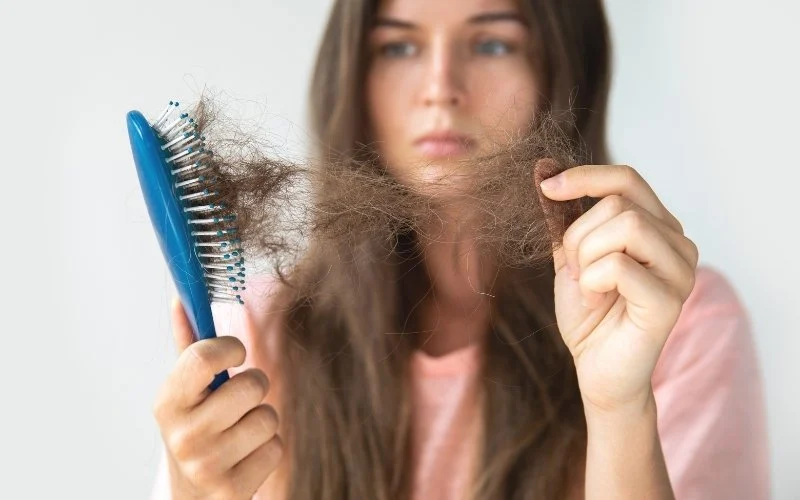
When you notice that your parting is widening or your ponytail is getting thinner, the question that comes to mind is this: why does hair loss occur in women? In women, hair loss usually depends not on a single cause but on a combination of hormonal periods, nutritional deficiencies and genetic predisposition. The good news is that most of these causes are temporary or correctable.
Complete baldness is rare in women; usually diffuse thinning is seen at the crown. In this article, we discuss which conditions trigger hair loss, when it is temporary and at what point you should see a specialist. Our aim is not to increase anxiety but to guide you with the right information.
Highlights
- In women, hair loss usually appears as diffuse thinning at the crown; complete baldness is rare.
- Temporary hair loss in the postpartum period resolves on its own within a few months in most women.
- Low ferritin stands out in a significant share of hair loss in women; in some studies the rate exceeds 30%.
- Hormonal changes such as menopause and thyroid problems directly affect hair density.
- Rapidly progressing hair loss or loss in clumps should be assessed without delay.
Why Does Hair Loss Occur in Women, and What Are the Main Causes?
When we look at why hair loss occurs in women, several main headings emerge. Hormonal fluctuations, iron and vitamin D deficiencies, thyroid problems and genetic predisposition are the most common underlying grounds. These factors often feed one another and make the picture more pronounced.
What matters is telling a temporary fluctuation apart from a permanent thinning. Because the same symptom can arise from different causes, guessing is misleading. The right approach is to clarify the cause through tests and an examination.
What Does Female Pattern Hair Loss Look Like?
Female pattern hair loss follows a different course from the receding hairline seen in men. Usually a thinning that starts along the parting and spreads to the crown is seen. The frontal hairline is mostly preserved and no complete bald area forms.
This type progresses slowly and is closely linked to genetic predisposition. When noticed early, it is possible to slow its progression. That is why a markedly widening parting is a good sign that an assessment is due.
When Does Hormonal Hair Loss Occur?
Hormonal hair loss becomes more pronounced during periods when the body’s hormonal balance changes. Changes in birth control methods, polycystic ovary syndrome and thyroid problems can trigger this picture. In these periods, hair loss is usually diffuse and depends on the root cause.
In hormone-related hair loss, the real solution is aimed not at the hair but at the underlying imbalance. Simple blood tests reveal hormone and thyroid status. Once balance is restored, the hair usually recovers as well.
Does Postpartum Hair Loss Go Away?
Postpartum hair loss is a temporary and expected condition experienced by many women. Hair that thickened during pregnancy falls out in bulk after birth as hormone levels return to normal. This loss usually begins a few months after delivery.
The good news is that in most women this picture resolves on its own and the hair returns to its former density. Recovery can take a few months, and patience is important during this time. Balanced nutrition and gentle care support the process.
What Is the Relationship Between Menopause and Hair?
The relationship between menopause and hair is directly linked to the decline in hormone levels. During this period, hair thinning, loss of density and dryness are common complaints. The change progresses slowly and is more pronounced in women with a genetic predisposition.
To protect hair health during menopause, nutrition and scalp care gain importance. If there is a marked and rapid loss, it is not right to attribute it to menopause and wait. In such cases, getting an assessment is a good guide.
Why Is Iron Deficiency Common in Women?
Because of menstrual periods, iron loss is greater in women than in men. This can lead to a decrease in the iron stores that nourish the hair root. Low ferritin is a frequently encountered ground in hair loss in women.
Even if the blood count looks normal, ferritin should be checked separately. Iron supplementation is always planned on a physician’s recommendation and at the right dose. Because replenishing the stores can take months, seeing the result takes time.
Do the Thyroid and Other Diseases Play a Role?
An underactive or overactive thyroid gland can directly disrupt the hair cycle. This type of hair loss is usually diffuse and is seen together with symptoms such as fatigue and weight changes. Once the underlying problem is corrected, the hair recovers as well.
Some autoimmune diseases and chronic conditions can also be accompanied by hair loss. That is why a comprehensive assessment is needed for persistent hair loss. Sharing the medications you use with your physician speeds up finding the right cause.
Do Stress and Lifestyle Have an Effect?
Intense and prolonged stress can trigger temporary hair loss by shifting the hair cycle into the resting phase. Lack of sleep and irregular eating strengthen this effect. The loss usually becomes noticeable a few months after the stressful period.
This type of hair loss is mostly not permanent and subsides as lifestyle recovers. Those curious about the scientific framework can read publications on female pattern hair loss . Stress management alone is not a solution, but it is a step that improves the picture.
Are Hair Care and Tight Hairstyles Harmful?
Constantly pulling the hair back tightly, heavy accessories and tight styles create a tension that damages the root. Over time, this tension can lead to thinning along the hairline. Very frequent coloring and aggressive heat treatments also make the strands brittle.
Soft brushes, loose styles and gentle cleansing protect the existing hair. Not combing wet hair roughly also reduces strand loss. These small changes provide greater protection than expected.
When Should You See a Doctor?
Hair loss that starts suddenly, progresses rapidly or occurs in clumps should be assessed without losing time. This is even more important if itching, redness and flaking of the scalp accompany it. Early diagnosis keeps most options open.
You can find the general framework in our What Causes Hair Loss? article. If you are unsure which specialist to see, consulting a center experienced in hair is a good guide. A step taken at the right time turns the process in your favor.
What Are the Treatment Options?
In women, treatment begins first with the right diagnosis; an approach that does not suit the cause gives no result. If there is a deficiency, correcting it takes priority; if there is a hormonal problem, regulating it does. In permanent predisposition, the goal is to slow progression.
Treatments directed at the scalp and nutritional adjustments are part of most plans. Those curious about how hair loss in children differs can look at our hair loss in children article. Realistic expectations are the foundation of satisfaction.
Contact Us
Contact Us Now for Free Consultation and Appointment!
What Are the Daily Precautions?
Eating a balanced diet, drinking enough water and maintaining a regular sleep pattern support hair health. Foods rich in iron and protein are especially important for women. Avoiding tight hairstyles and excessive heat treatment reduces breakage.
These steps do not eliminate an underlying hormonal or genetic cause; they only strengthen the groundwork. In other words, daily care can never replace the right diagnosis and treatment. If a marked loss continues, a specialist assessment is absolutely necessary.
Is Hair Transplant Performed on Women?
Hair transplant is an option that can also come up for women but requires careful candidate selection. Because hair loss in women is usually diffuse, a transplant may not be suitable for everyone. That is why the type and cause of the hair loss must first be clarified. A natural result is possible in a suitable candidate.
A transplant does not stop the underlying tendency to hair loss; a separate plan is needed to preserve the existing hair. In most women, the process can be managed with medical approaches in the early stage. For this reason, a transplant is not the first step but one considered in selected cases. The decision should be made after a detailed assessment.
Summary of the Causes of Hair Loss in Women
The table below briefly summarizes the common causes of hair loss in women.
| Why? | Course | Typical Period | Is it permanent? |
|---|---|---|---|
| Postpartum | Resolves in a few months | After childbirth | No. |
| Iron deficiency | Improves once corrected | Any age | No. |
| Menopause | Progresses slowly | Menopausal period | Variable |
| Female pattern (genetic) | Progresses slowly | Adulthood | Usually yes |
Those who want to see all the causes in one place can browse the content in our hair loss category, where you can browse related content. Which cause stands out becomes clear only with a personalized assessment.
At Medlook Private Clinic, a women-specific assessment is carried out to draw up the right plan for your hair. For your questions, with us you can contact.
Author: Dr. Handan Yavuz, Medical Aesthetics Specialist. This content has been prepared to answer the questions of those curious about hair loss in women.
Frequently Asked Questions (FAQ)
Why does hair loss occur in women, and what is the most common cause?
Hormonal changes, iron deficiency and genetic predisposition stand out most often. These factors frequently play a role together; tests and an examination determine the distinction.
Is postpartum hair loss permanent?
No, in most women it is temporary. This loss, which occurs as hormone levels return to normal, usually subsides within a few months and the hair returns to its former density.
Can hair loss be stopped during menopause?
Hair thinning is common during menopause. Nutrition, scalp care and, when necessary, medical support can slow the progression; an assessment is recommended in case of marked loss.
Do women go bald?
Complete baldness is rare in women. Hair loss usually appears as diffuse thinning at the crown, and the frontal hairline is mostly preserved.
Is iron supplementation alone enough?
It is useful only if ferritin is low. If there is no deficiency, supplements provide no benefit; the correct dose can only be determined with a blood test and a physician’s recommendation.
When should I see a specialist?
If the loss is sudden and rapidly progressing, if hair comes out in clumps, or if there is itching and redness on the scalp, seek help without delay. Early diagnosis keeps options open.
Can’t find your question here?Send us what you would like to know and our team will get back to you.
WhatsAppYou May Also Like
NoMor or Light Filler? 5 Differences Under the Eyes
NoMor or light filler for the under-eye area? Compare the purpose and effect of both methods, and which type of dark circle each suits, from an expert perspective.
PRP Prices 2026: What Do They Depend On?
What do PRP prices depend on, and which factors determine the cost? We explain, from an expert's perspective, how the number of sessions, kit type and treatment area affect the 2026 price.
How Many Sessions of Hair PRP? Procedure and Aftercare 2026
What is hair PRP, how does it work against hair loss, and who is it for? We cover the use of plasma prepared from a person's own blood for hair.
 Turkish
 English
 German
 French
 Italian