
The Secret to Healthy Hair: Balanced and Adequate Nutrition
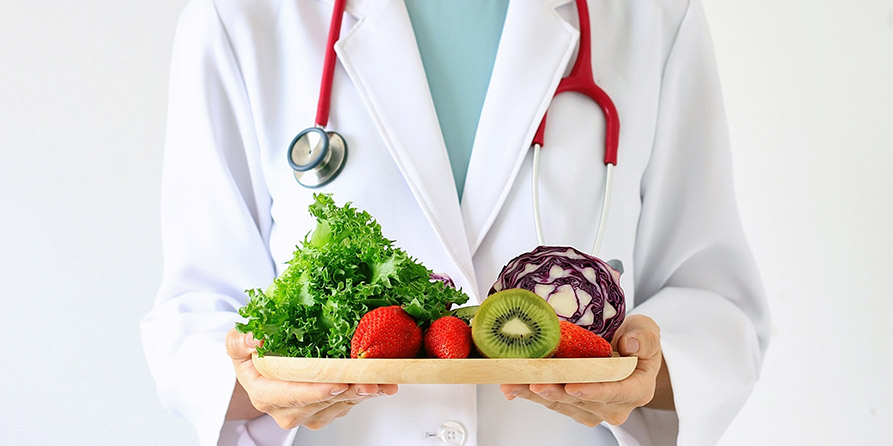
Our hair is the most valuable accessory for most of us. But it should be considered as an organ rather than an accessory. Because the hair cells in our body proliferate thanks to the oxygen and peptides in the blood and form the hair and the hair is provided to grow healthy with vitamins and minerals. For this reason, our hair is actually a structure that feeds and grows with the blood in our body.
Any deficiency/excess or anomaly in our blood causes various problems in the hair just as it causes problems in other organs and systems.
Sufficiency of almost all micronutrients, from fat-soluble vitamins (A, D, E, K) to water-soluble vitamins (C and B groups) and various minerals, is essential for the proper functioning of our body and all the systems in our body. However, the body is like a well-oiled machine that, in the event of a deficiency, uses what is available primarily for vital organs and systems and distributes the remaining amount to structures such as our hair, nails, etc. For this reason, adequate levels of all vitamins and minerals are important for our hair health.
Adequate vitamin-mineral levels are only possible with a healthy and balanced diet.
Let's take a look at which vitamin and mineral groups are essential for healthy hair and which foods should be in abundance.
Vitamin A :
- It is one of the fat-soluble, soluble vitamins.
- Since it supports cell growth and differentiation, it plays a role in the health of skin, nails and hair and contributes to the development of hair strands.
- There are 2 different forms of vitamin A in the diet: active vitamin A (retinol) and provitamin A (vitamin A precursor).
- Retinol is found in animal foods such as liver, fish oil, milk, cheese and egg yolks; provitamin A is found in plant foods such as sweet potatoes, pumpkin, peas, carrots, red peppers, parsley, cantaloupe, watermelon, apricots, tangerines and grapefruit.
- For this reason, although deficiency in adequate and balanced nutrition is not a common condition, since most of this vitamin is stored in the liver, unconscious supplementation without detecting deficiency may cause toxic side effects.
Vitamin D :
- It is one of the fat-soluble vitamins.
- This vitamin is also available in 2 forms, cholecalciferol (D3) and ergocalciferol (D2).
- It can both be taken in from outside through diet and produced in the synthesis of cholesterol in the body.
- However, vitamin D, which is produced by cholesterol synthesis, can only be used in the body with sunlight. Therefore, as we are all familiar with, one of the most important sources is sunlight.
- It is abundant in oily fish such as mackerel, salmon, herring, mullet and fish oil, egg yolk and liver.
- Vitamin D deficiency is more common in individuals with dark skin, those who work mostly indoors, infants who are exclusively breastfed and not given supplements, overweight individuals, pregnant women and the elderly.
- In case of deficiency, lifelessness and hair loss are observed.
Vitamin E :
- It is a fat-soluble vitamin with strong antioxidant properties.
- It is of great importance in the formation and health of hair cells. Accordingly, it prevents hair loss and breakage and provides healthy hair growth.
- Since it is abundant in natural foods, deficiency is not common. However, some types of antidepressants and antipsychotic drugs may reduce intestinal absorption.
- It is abundant in wheat, corn, rice from cereal groups; sunflower, corn oil, etc. known as vegetable oils; nuts such as walnuts, almonds and green vegetables.
- It is abundant in wheat, corn, rice from cereal groups; sunflower, corn oil, etc. known as vegetable oils; nuts such as walnuts, almonds and green vegetables.
Vitamin C :
- It is one of the most essential antioxidants for our body.
- In addition to its contributions to the immune system, it increases blood circulation and provides more blood and oxygen to the cells. Accordingly, it accelerates hair growth and elongation.
- One of its most basic functions is to participate in the synthesis of collagen, one of the main structural proteins in the body.
- In addition, it also increases the absorption of iron mineral. In cases such as iron deficiency anemia, hair loss is frequently experienced.
- Although deficiency is not a common condition, absorption from the intestine decreases in smokers. In case of deficiency, deterioration in hair structure occurs.
- Citrus fruits, green-red peppers and greens (parsley, dill, etc.) are the richest sources.
Vitamin B3 (Niacin):
- Niacin, one of the main vitamins required for energy production, also contributes to blood circulation and ensures that the scalp and hair follicles are healthy. It increases the growth rate of hair and prevents thinning of hair strands.
- In deficiency, dermatitis and various skin lesions can be seen and metabolism slows down. It is abundant in poultry, fish and veal, milk and dairy products. It is also found in enriched foods (bread, cereals).
Vitamin B7 (Biotin):
- Biotin, also known as Vitamin H, improves hair quality by supporting the production of keratin, the most essential protein required for hair production.
- Since it cannot be stored in the body, it is important to get enough with nutrition to avoid deficiency.
- Biotin deficiency is frequently observed in frequent and long-term antibiotic use, excessive alcohol and cigarette consumption, chronic gastrointestinal system diseases such as inflammatory bowel disease (Chron), celiac disease, etc. In this case, severe hair loss, nail weakness and skin problems may occur.
- It can cause dull and lifeless hair, nails that break and peel quickly, and pale skin appearance.
- It is found in animal foods such as liver, egg yolk, red and white meat and plant foods such as avocados and bananas.
Vitamin B9 (Folic acid):
- Folic acid, one of the most important vitamins in the body, plays a vital role in cell division and differentiation.
- Provides regeneration and repair of hair cells.
- It can be obtained from food and is also produced by beneficial bacteria in the intestine. For this reason, its deficiency is common in malabsorption in the gastrointestinal tract, excessive alcohol use and pregnancy. This is one of the main causes of severe hair loss.
- Dark green leafy vegetables, legumes, citrus fruits and liver are the richest food sources. It is also found in enriched cereal products.
- It is found in animal foods such as liver, egg yolk, red and white meat and plant foods such as avocados and bananas.
Vitamin B12:
- Just as a cell needs oxygen to function and multiply in a healthy way, hair follicle cells also need oxygen and blood supply. Vitamin B12 plays a vital role in the production of red blood cells that carry oxygen to the cells.
- Since it is found only in foods of animal origin, its deficiency is frequently observed in vegan individuals.
- In addition, as with most vitamins, deficiency occurs with excessive alcohol intake and absorption disorders such as celiac disease, inflammatory bowel disease, etc. In case of deficiency, pernicious anemia (anemia), fatigue, exhaustion and permanent brain and nerve damage may occur.
- The richest sources are liver, spleen, shellfish, eggs, milk and dairy products.
Selenium :
- It is a trace element with powerful antioxidant properties.
- It is necessary for the production of thyroid hormones that help hair growth. It also prevents dandruff, one of the common hair problems.
- Adequate selenium intake is essential for healthy hair growth and regeneration.
- It is usually found in meat, fish, milk and dairy products and cereals, which have a high protein content.
- In case of deficiency, the body can become vulnerable to diseases due to a decrease in the immune system. It can also exacerbate iodine deficiency.
Iron:
- It is a vital mineral essential for protein synthesis, enzyme production and activity.
- In iron deficiency, the body cannot produce the hemoglobin found in the blood. Hemoglobin carries the oxygen needed for the growth and repair of all cells in the body, including cells that stimulate hair growth.
- For this reason, severe hair loss and weakening can occur in case of deficiency.
- Deficiency can be detected by looking at the levels of ferritin protein, known as iron storage, in the blood.
- There are 2 different types of iron in foods: "heme" and "non-heme" iron. "Heme" iron found in animal foods can be absorbed more easily in the body than "non-heme" iron found in plant foods.
- It is abundant in liver, red meat, poultry, green leafy vegetables, legumes and nuts.
Zinc :
- It is an essential mineral with strong antioxidant properties that must be obtained through food because it is not produced by the body.
- Zinc has an important role for body functions and contributes to hair, nail and skin health.
- It plays an important role in the growth and repair of hair tissue. It also helps the sebaceous glands around the hair follicles to function properly. Hair loss is one of the most common symptoms of zinc deficiency.
- It is abundant in shellfish, red meat, poultry and whole grains.
All these vitamins and minerals are vital for the regulation of events in the body.
Deficiencies can cause problems affecting many different tissues and organs, including hair.
Therefore, the most important thing that can be done for a healthy adult is to create a balanced and regular healthy eating plan and make it a routine.
For a healthy diet, it is recommended to consume fish at least 2 times a week and 5 servings of vegetables and fruits daily.
For each meal, allocating half of the plate to the vegetable-fruit group, 1/2 of the remaining half to carbohydrate sources and the other 1/2 to protein sources will create a sufficient balance for both vitamin-mineral and carbohydrate-fat-protein intake.
If these micronutrients (vitamins and minerals) cannot be obtained through diet for various reasons, they can be taken as supplements under the supervision and advice of a doctor.



 Turkish
  English
  German
  French
  Italian