

How Many Grafts Does a Hair Transplant Require, and How Is It Calculated?
 Dr. Handan YavuzUpdated 6 min read
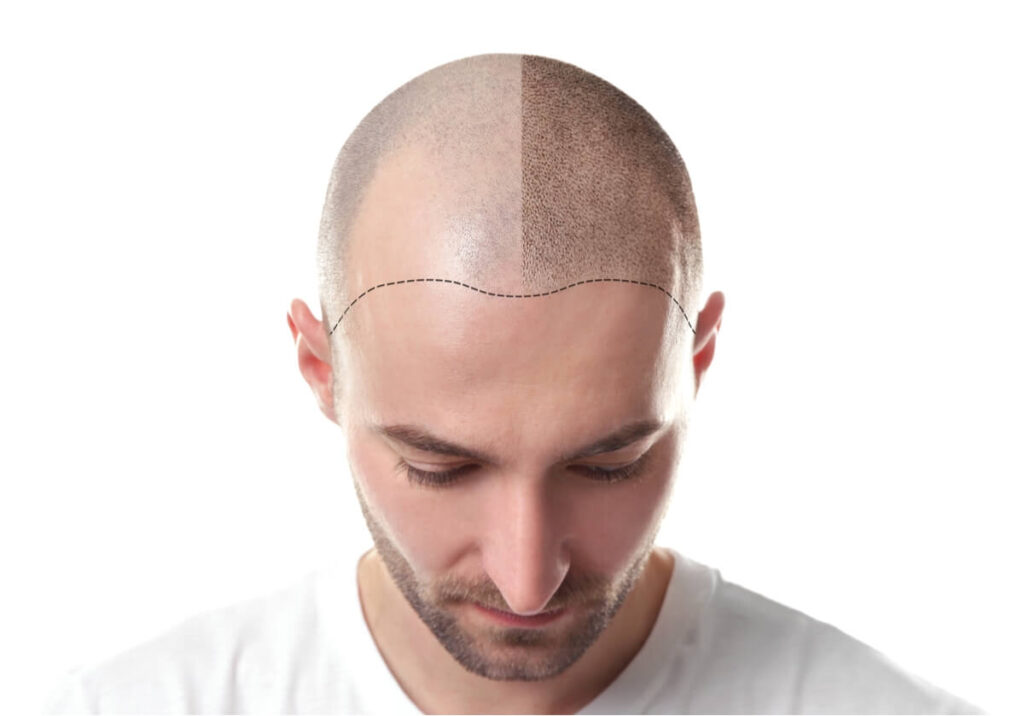
At the decision stage, one of the most frequently asked questions is the number of roots needed. The question of how many grafts a hair transplant requires has no single answer; the number varies from person to person. The size of the bald area, degree of hair loss, and donor capacity determine this calculation. The right number emerges only through a detailed examination.
In this article, we cover what a graft is, how the number is calculated, and which factors it depends on. The aim is to help you evaluate the plan offered to you in an informed way. That way, you can understand the logic behind the number. We explain each heading in plain language.
Highlights
- The number of grafts is individual; there is no single standard figure.
- The width of the bald area and the degree of hair loss determine the calculation.
- Donor capacity limits the maximum number that can be transplanted.
- A few thousand grafts are needed in small areas, and more in large areas.
- Satisfaction is reported to be close to 90% among patients whose treatment is planned in a balanced way.
How Many Grafts Does a Hair Transplant Require?
How many grafts a hair transplant requires depends first of all on the size of the area to be covered. A few thousand grafts may be enough for a narrow frontal line. Large areas including the crown require a higher number. That is why every plan is made individually.
The second key factor that determines the number is donor capacity. The stronger the nape area, the more grafts can be harvested. However, the donor is not unlimited and must be used in moderation. The right number is found in the balance between need and capacity.
What Is a Graft, and How Does It Differ from a Root?
A graft is a natural root unit containing one or several hair strands. A graft can be single-haired or have three or four hairs. That is why the number of grafts is not the same as the number of hair strands. The real density in the transplanted area also depends on the number of strands in the grafts.
Single-hair grafts are generally preferred at the frontal line. In the back areas, density is achieved with multi-hair grafts. This distribution is the foundation of a natural look. Knowing the difference between grafts and strands helps you read the plan correctly.
How Is the Graft Calculation Done?
Graft calculation begins with measuring the area to be covered in square centimeters. The density targeted per square centimeter gives the total number. The degree of hair loss and existing hair are also taken into account. This measurement is made with an experienced eye and photographic analysis.
The calculation takes into account not only today but also the future. Hair loss that may progress later is included in the plan. That way, the donor is used in a way that will be preserved in the long term. A correct calculation provides both a natural result and a sustainable plan.
What Is the Norwood Scale Used For?
The Norwood scale is a scale that grades male pattern hair loss. It describes the stage of hair loss in a common language. This classification helps estimate the required graft range. Thus, planning rests on a more objective basis.
The scale alone does not give an exact number, but it is a good starting point. It is combined with personal measurement and donor assessment. For related context, you can look at graft count articles for more information. The scale builds a shared language between patient and physician.
- It describes the degree of hair loss in a common language,
- It helps estimate the required graft range,
- It moves planning onto a more objective basis,
- It builds a shared language between patient and physician,
- It is refined by combining it with personal measurement.
What Is the Graft Requirement by Area?
Each area requires a different density and number of grafts. The frontal hairline is the area that requires the most care and single-hair grafts. The crown requires more grafts because of its circular structure. The temples and mid-scalp are planned according to need.
Addressing the areas together provides a balanced result. Focusing on one area and neglecting another spoils the natural look. That is why the distribution is planned holistically. The share of each area is determined with overall harmony in mind.
- Frontal line: natural transition with single-hair grafts,
- Mid-scalp: fullness with balanced density,
- Crown: more grafts for the circular structure,
- Temples: transplantation that completes the frame of the face,
- All areas: holistic and balanced distribution.
What Is the Donor Capacity Limit?
Donor capacity is the amount of roots that can be safely harvested from the nape and behind the ears. This amount varies from person to person and sets the limit of the result. Excessive harvesting can lead to noticeable thinning in the donor area. That is why capacity is used carefully and in moderation.
A good plan considers today's need together with possible future hair loss. Once the donor is thinned, it cannot be refilled. That is why a sustainable approach is essential. Capacity is the most decisive limit of planning.
How Does Transplant Density Affect the Result?
Transplant density refers to the number of grafts placed per unit area. High density provides a fuller look. However, excessive density can make it harder for the roots to be nourished. That is why density is balanced with tissue health in mind.
The right density strikes a balance between a natural look and fullness. A gradual distribution at the frontal line and a denser one at the back is preferred. This arrangement imitates the real way hair grows. Density is a factor that affects the result as much as the number does.
Are More Grafts Always Better?
A higher graft count does not always mean a better result. An aggressive plan that strains the donor can cause problems in the future. Excessive density also negatively affects the roots' survival. The goal is not the highest number, but a balanced distribution.
A properly planned transplant looks full even with a moderate number. That is why you should focus on the plan and technique, not the number. A realistic goal preserves long-term satisfaction. Quality is often more important than quantity.
How Much Can Be Transplanted in a Single Session?
The number of grafts that can be transplanted in a single session is limited by donor capacity and procedure time. In most people, this number stays within a certain range. Very large areas are sometimes divided into two sessions. This both protects the donor and guarantees quality.
The length of the session also sets a limit in terms of quality. An excessively long session increases the time the roots spend waiting. That is why a reasonable plan makes the result safer. When needed, a second session is a healthy choice.
- Donor capacity sets the limit of a single session,
- Very large areas can be divided into two sessions,
- Session length affects the time the roots spend waiting,
- A split plan protects the donor and improves quality,
- A second session is a healthy option when needed.
Contact Us
Contact Us Now for Free Consultation and Appointment!
What Factors Affect the Number of Grafts?
Many personal factors determine the number. The width of the bald area, degree of hair loss, and donor quality are the main ones. Hair strand thickness and skin contrast are also influential. These factors are evaluated together.
The desired density and the forecast of future hair loss are also taken into account. That is why the number can vary even at the same Norwood grade. A personalized plan combines all these factors. The right number is found only through a holistic evaluation.
- The width of the bald area and the degree of hair loss,
- The capacity and quality of the donor area,
- Hair strand thickness and skin contrast,
- The targeted transplant density,
- The forecast of possible future hair loss.
Graft Ranges by Area
The table below summarizes the approximate graft requirement by area.
| Region | Approximate Range | Priority |
|---|---|---|
| Frontal line | 1.000-2.000 | Natural transition |
| Mid-scalp | 1.500-2.500 | Fullness |
| Crown | 2.000-3.500 | Coverage |
| Temples | 500-1.000 | Framing |
| Large area | 4,000 and above | Holistic plan |
For an overview, you can read our How is Hair Transplantation Done? guide and, for information specific to women, our hair transplant in women article; for other topics, you can browse our hair transplant category.
A personal measurement is made at Medlook Private Clinic to determine the right graft count for you. For any questions, you can you can contact.
Author: Dr. Handan Yavuz, Medical Aesthetics Specialist. This content has been prepared for people who are curious about how many grafts a hair transplant requires.
Frequently Asked Questions (FAQ)
How many grafts are used in a hair transplant?
The number is individual; a few thousand may be needed for narrow areas and more than four thousand for large areas. The size of the bald area and the donor capacity determine the calculation. The right number becomes clear after measurement.
Is a graft the same as a hair strand?
No. A graft is a root unit containing one to four hair strands. That is why the graft count differs from the strand count. The real density also depends on the number of strands in the grafts.
What does the Norwood scale show?
It grades the stage of male pattern hair loss. This classification helps estimate the required graft range. The exact number is determined by the individual measurement.
Do more grafts give a better result?
Not always. An aggressive plan that strains the donor can cause problems in the future. A balanced distribution looks full even with a moderate number. The goal is not the number, but a natural and sustainable result.
How many grafts can be transplanted in a single session?
The number is limited by donor capacity and session length. Very large areas are sometimes divided into two sessions. This approach both protects the donor and guarantees quality.
Who determines the number of grafts?
The number is determined by the physician through measurement and donor assessment during the examination. The bald area, degree of hair loss, and expectations are evaluated together. Photographic analysis also contributes to this calculation.
Can’t find your question here?Send us what you would like to know and our team will get back to you.
WhatsAppYou May Also Like

NoMor or Light Filler? 5 Differences Under the Eyes
NoMor or light filler for the under-eye area? Compare the purpose and effect of both methods, and which type of dark circle each suits, from an expert perspective.
PRP Prices 2026: What Do They Depend On?
What do PRP prices depend on, and which factors determine the cost? We explain, from an expert's perspective, how the number of sessions, kit type and treatment area affect the 2026 price.
How Many Sessions of Hair PRP? Procedure and Aftercare 2026
What is hair PRP, how does it work against hair loss, and who is it for? We cover the use of plasma prepared from a person's own blood for hair.
 Turkish
 English
 German
 French
 Italian
 Russian
 Romanian