
What Is Nose Botox, and Who Is It For?
Nose Botox is a non-surgical procedure that temporarily relaxes a small muscle (depressor septi) that pulls the tip of the nose downward, thereby reducing the appearance of a drooping nose when smiling. It does not produce a permanent change in shape like rhinoplasty; it merely softens the appearance caused by movement. In this regard, it is not an alternative to surgery but rather a method that addresses a different issue.
Featured Headlines
ToggleIt is particularly recommended for people whose nose tip droops or whose distance between the upper lip and nose shortens when they smile. The procedure is quick, requires no recovery time, and the results become noticeable within a few days. In this article, we discuss who is a good candidate for nose Botox, how it’s performed, and how long the effects last.
Highlights
- This procedure significantly reduces the appearance of a drooping nose when smiling by relaxing the depressor septi muscle, which pulls the tip of the nose downward.
- It is a non-surgical procedure; the treatment takes just a few minutes, and the patient can return to their daily routine the same day.
- The effects last an average of 3–4 months; it does not result in a permanent change in shape.
- It produces good results for mild to moderate drooping of the tip of the nose, but is insufficient for structural deformities.
- Hasta memnuniyeti, uygun aday seçiminde yapılan değerlendirmelerde %80’in üzerinde bildirilir.
What Is the Purpose of Nose Botox?
The tip of the nose is pulled downward by the contraction of the depressor septi muscle during a smile. In some people, this movement causes a noticeable drooping with every smile, which can look unflattering in photographs. When the muscle is relaxed, the tip of the nose remains more stable, and the drooping appearance while smiling is reduced.
In addition, in some individuals, excessive retraction of the upper lip (gummy smile) can also be softened with this procedure. The goal is to reduce only the noticeable flaw while preserving a natural expression. The facial expression does not change entirely; only the unwanted movement is balanced.
Who Is a Candidate for Nose Tip Botox?
Nose tip Botox is suitable for people who have a nose that droops when they smile and do not want surgery. It produces good results for mild to moderate nose tip drooping. It’s also a good starting point for those seeking a quick solution who haven’t yet decided on a permanent procedure.
However, structural deformities caused by bone or cartilage cannot be corrected with this method; such cases fall outside the scope of non-surgical rhinoplasty. Botox is not suitable for bumps on the bridge of the nose or pronounced deformities. The appropriate candidate is determined through a detailed examination.
What's the Difference with Non-Surgical Rhinoplasty?
Non-surgical rhinoplasty typically uses fillers to reshape the nose, while Botox for the nose targets muscle movement. The two address different issues and are sometimes planned in combination. While fillers add volume, Botox only reduces sagging caused by muscle movement.
In other words, fillers are typically used to fill a depression on the bridge of the nose, while Botox is used to correct a tip that droops when smiling. If permanent volume restoration or correction of a prominent bump is needed, surgical options are also considered. The appropriate method is determined based on the cause of the concern.
How Is Nose Botox Administered?
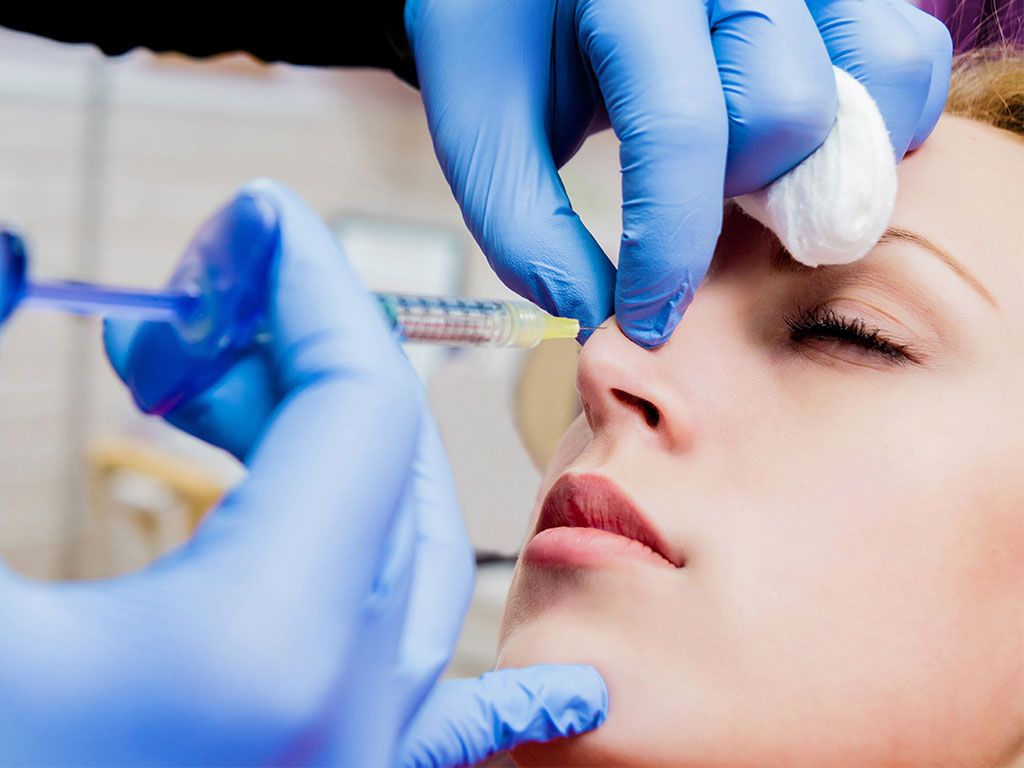
The procedure involves administering a small dose into the target muscle at the base of the nose using a very fine needle. The procedure takes just a few minutes and requires no special preparation. Anesthesia is generally not necessary; it feels like nothing more than a brief prick.
The effects begin within 3–5 days, and the full results become apparent within two weeks. During this time, it’s important not to rush to judge the results. For reviews supporting this claim, clinical publications on this topic can be viewed.
- Processing time: a few minutes
- Onset of effect: 3–5 days
- Full results: approximately 2 weeks
- Duration of effect: 3–4 months on average
How Long Does the Effect Last, and Should It Be Renewed?
The effects of Botox for the nose last an average of 3–4 months. The duration of the Botox’s effects may vary slightly depending on the individual’s muscle strength and metabolism. Once the effects wear off, the tip of the nose returns to its original movement; no permanent changes remain.
Those who wish to maintain the results can have the treatment repeated before the effects wear off completely. It has been observed that the effects last slightly longer with regular repeat treatments. The interval between treatments becomes clear after the first session, depending on the individual.
Risks and Precautions
When administered at the correct dose, this procedure is safe. No serious side effects are expected other than temporary redness or minor bruising. These effects resolve on their own within a few days.
Excessive or incorrect dosing may result in temporary asymmetry in upper lip movement; therefore, it is important that the procedure be performed by an experienced physician. Because the area is small and sensitive, the precision of the dosage directly affects the results. Once the effects wear off, any potential undesirable appearance will also subside.
What Should You Prepare Before the Procedure?
Before the procedure, you should inform your doctor about any medications or supplements that have a blood-thinning effect. Aspirin, fish oil, and certain herbal supplements can increase the risk of bruising. Avoiding alcohol for a few days before the procedure also helps reduce this risk.
On the day of the procedure, it is sufficient for the area to be clean and free of makeup. Additionally, discussing your expectations openly with your doctor ensures that the outcome is tailored to your wishes. A photo-based assessment helps clarify the movement that occurs when you smile.
Does the Result Look Natural?
With the right dosage, the results are natural and imperceptible. The goal is not to alter your smile, but simply to reduce unwanted drooping. Your facial expression remains unchanged; those close to you usually won’t realize you’ve had work done.
The key to a natural look is to balance movement rather than completely stopping it. That is why a measured approach by an experienced physician is important. Choosing a conservative dose for the first treatment ensures a comfortable start.
Can It Be Done Along With Other Procedures?
This procedure can be scheduled during the same session as other cosmetic treatments, such as upper-face Botox or lip treatments. For example, if a gummy smile is noticeable, it is evaluated in conjunction with the upper lip area. This ensures that the smile is addressed as a whole.
The treatment plan is determined based on an analysis of the individual’s face, and a separate dose is calculated for each area. The goal is to avoid correcting one area while neglecting another. This holistic approach yields a more balanced and natural result.
Who Should Avoid This Method?
Pregnant and breastfeeding individuals, those with certain neuromuscular disorders, and those with an active infection at the treatment site should avoid this procedure. Individuals with a known allergy to the product are also not suitable candidates. For this reason, a detailed medical history is taken before the procedure.
In addition, individuals with significant structural abnormalities on the bridge of the nose are referred to various options for a permanent solution. Realistic expectations are the foundation of satisfaction. Selecting the right candidate determines both safety and the quality of the results.
Common Misconceptions
The most common misconception about this treatment is the belief that it will permanently reshape the nose. In fact, the effect is temporary, and once the treatment period ends, the nose returns to its original appearance. A permanent change is only possible through surgery.
Another misconception is that the procedure requires a long recovery period. In reality, the patient returns to their daily routine the same day and often continues working without even taking time off. Accurate information reduces unnecessary anxiety and ensures that decisions are made in a well-informed manner.
A Comparison of Nose Botox and Non-Surgical Nose Fillers
The two methods are often confused; which one is appropriate depends on the specific complaint.
| Criteria | Nose Botox | Nose Filling |
|---|---|---|
| Goal | The tip of the nose that droops when you smile | Shape and Bump Correction |
| Mode of action | Relaxes the muscles | Adds volume |
| Implementation period | A few minutes | A few minutes |
| Duration | 3-4 months | 9–18 months |
| Is it permanent? | No. | No (but longer) |
Those who want to evaluate the topic of nose Botox as a whole What is Botox? and Botox around the eyes You can browse our content; for all Botox treatments, botox applications You can check out our page.
A personalized assessment for nose Botox begins with a detailed examination at the Medlook Clinic. Please contact us with any questions you may have. you can contact.
Author: Dr. Handan Yavuz, Medical Aesthetics Specialist. This content has been prepared to answer patients’ questions about nose Botox.
Contact Us
Contact Us Now for Free Consultation and Appointment!
Frequently Asked Questions (FAQ)
No, it does not change the size of your nose. It simply relaxes the muscle that pulls the tip of the nose downward, reducing the drooping appearance that occurs when you smile; it does not alter the bone or cartilage structure. Surgical procedures are required to change the size of the nose.
The effects typically last 3–4 months. The duration may vary from person to person; it has been reported that the results last longer when the treatment is repeated regularly. Once the effects wear off, the appearance returns to its original state.
It is usually sufficient for mild to moderate cases of a drooping nasal tip. If there is a structural deviation or a noticeable protrusion, Botox alone is not enough; this is evaluated during the examination.
Because a very fine needle is used, you will usually feel only a slight prick. The procedure takes a few minutes, and anesthesia is rarely needed. No pain is expected after the procedure.
For the first few hours, it is recommended that you avoid massaging the area, bending forward, and engaging in strenuous exercise. After that, you can resume your daily routine; no recovery period is required.
This procedure is not performed on pregnant or breastfeeding individuals, those with certain neuromuscular disorders, or those with an active infection at the treatment site. Eligibility is determined through a pre-procedure examination.



 Turkish
  English
  German
  French
  Italian