
What Causes Hair Loss in Men? Is It Genetics or Stress?
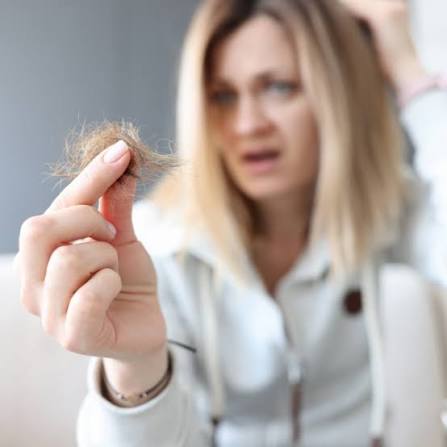
For many men, the first signs of aesthetic concerns (and sometimes a blow to their self-confidence) are when they notice their temples gradually receding as they look in the mirror, or when they see more strands of hair than usual in the sink while combing their hair. Hair frames the face, and losing it can make a person look much older than they actually are. So in men hair loss neden olur And is it possible to stop or reverse this process using medical methods?
Featured Headlines
ToggleAt Medlook Private Clinic, just as we do with the skin, What is ozone therapy? Just as we do in cellular repair processes, we approach hair from a “root-to-tip” and holistic (longevity) perspective. We examine not only the surface hairs but also the hair follicle—the source of the hair’s life—and the circulatory system.
1. The Most Common Cause: Male-Pattern Hair Loss (Genetic)
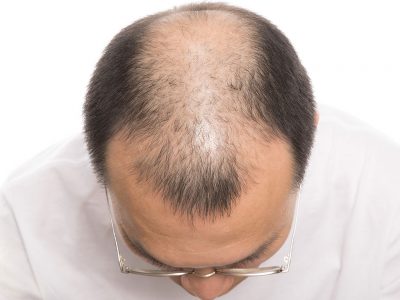
Erkeklerde görülen saç kayıplarının yaklaşık %90’ının sebebi Androgenetic Alopecia These are genetic factors known as "male-pattern hair loss.".
This type of hair loss is entirely hormone-related. Testosterone, the male hormone, combines with an enzyme in the body called ‘5-alpha reductase’ to DHT (Dihydrotestosterone) It turns into the DHT hormone. If your genetics (if your father or uncle is bald) make your hair follicles ‘overly sensitive’ to this DHT hormone, the hormone attacks the hair follicle. The follicle gradually thins, miniaturizes (becomes vellus-like), and eventually falls out completely and dies.
Male-pattern hair loss typically begins at the temples (in an "M" shape) or at the crown (vertex), while the sides and back of the head generally remain unaffected.
2. Secondary Causes: Lifestyle and External Factors
Even if your genetic makeup doesn't predispose you to hair loss, lifestyle factors can trigger it.
| Cause of Hair Loss | Effects on the Body | Solution Approach |
|---|---|---|
| Excessive Stress (Cortisol) | It constricts blood vessels, causing the roots to be deprived of oxygen and nutrients. | Ozone therapy, meditation, and circulation-boosting treatments. |
| Vitamin Deficiency | Deficiencies in vitamin D, zinc, iron, and vitamin B12 disrupt the hair growth cycle. | Vitamin IV supplements, Hair Mesotherapy in Istanbul directly supplying nutrients to the root. |
| Poor Nutrition | Strict diets (sudden protein loss) cut off the energy the body would otherwise devote to hair growth. | Personalized clinical nutrition counseling (Longevity). |
For detailed information on how stress can cause sudden hair loss (Telogen Effluvium), Will hair lost due to stress grow back? We definitely recommend that you take a look at our article.
What Should Be Done to Stop Hair Loss?
It is medically impossible to regrow lost hair based on hearsay or by using vegetable oils or shampoos claimed to be miraculous. Shampoo only cleans the scalp (dead cells); the living ones to the hair follicle (4–5 mm below the skin) cannot reach.
The real and lasting solution lies in clinical treatments that penetrate beneath the skin to the hair follicles. Hair mesotherapy treatments—which include PRP (stem cell support derived from your own blood) and nutrient-rich cocktails—stimulate the hair follicles and block the damage caused by DHT. If hair loss is very advanced and the hair follicles have died, the only permanent solution is a hair transplant procedure performed under the supervision of a specialist physician.
At Medlook, every treatment plan is tailored to the individual following a detailed hair (trichoscopy) and blood analysis. To learn more about hair loss treatments, contact us you can contact.
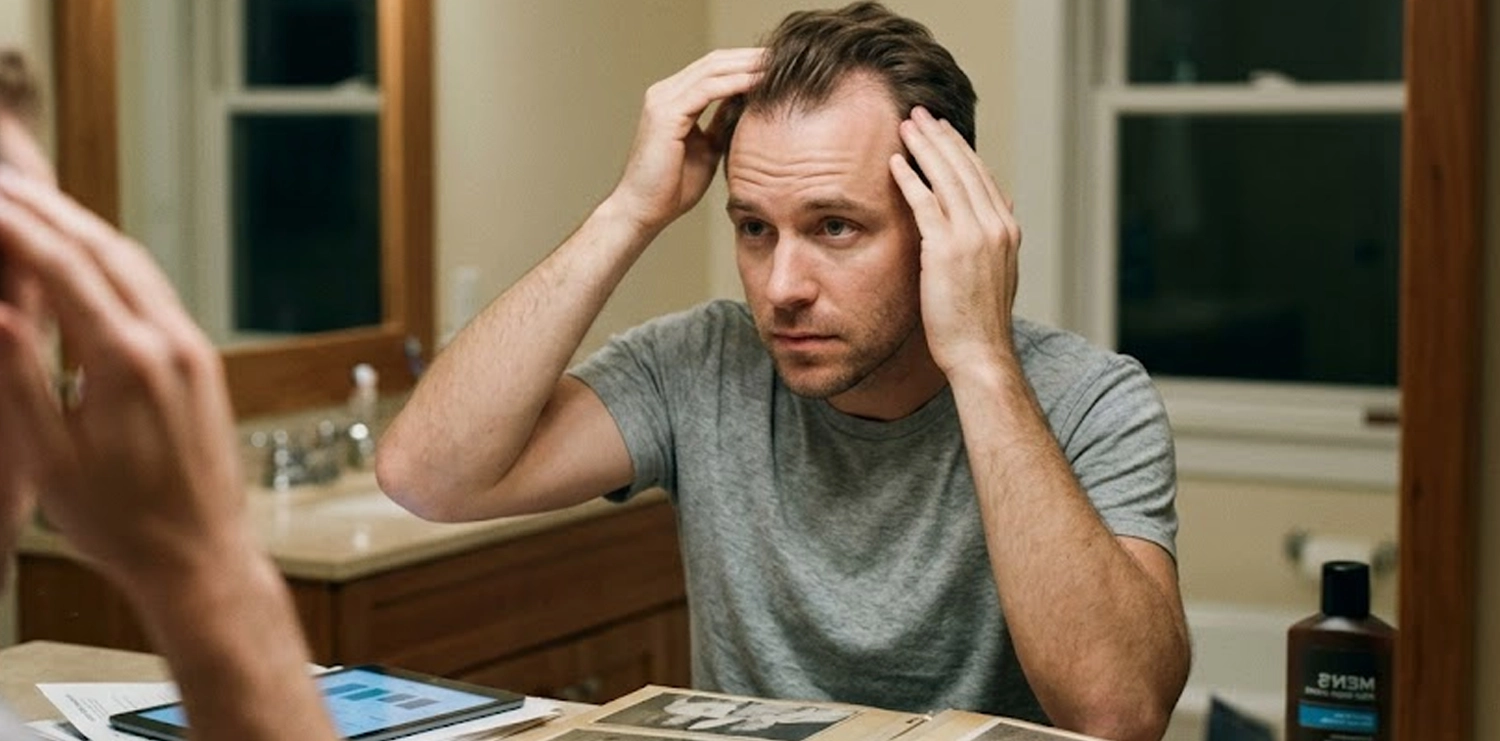
What Causes Hair Loss in Men? Male-Pattern Hair Loss (Androgenetic Alopecia) and Hormonal Effects
Erkeklerde görülen saç dökülmelerinin yaklaşık %95’i genetik kökenli olan Androjenik Alopesi, yani erkek tipi dökülmedir. Bu dökülmenin arkasındaki temel biyolojik faktör, testosteron hormonunun 5-alfa redüktaz enzimiyle DHT (Dihydrotestosterone) It is the conversion into the DHT hormone. Hair follicles that are genetically sensitive to DHT (especially those at the hairline and crown) gradually shrink (miniaturization), become thinner, and eventually stop producing hair entirely, leading to hair loss. Hair follicles in the back of the head, however, do not fall out because they are genetically resistant to the DHT hormone; for this reason, the back of the head is always preferred as the donor site for hair and eyebrow transplants.
The Effects of Nutrition, Stress, and Lifestyle on Hair Health
Although genetic factors are the primary determinant of hair loss, environmental factors directly affect its rate and severity:
- Vitamin and Mineral Deficiencies: Hair growth is a rapid process that requires a lot of energy and nutrients. Deficiencies in iron, zinc, vitamin B12, vitamin D, and biotin hinder the nourishment of the hair follicles, thereby accelerating hair loss.
- Chronic Stress and Cortisol: The hormone cortisol, which is released under intense stress, constricts blood vessels, reducing the amount of oxygen and nutrients reaching the hair follicles. This causes the hair to transition prematurely from the growth phase to the shedding phase.
- Improper Hair Care and Chemicals: Shampoos containing harsh chemicals and high-heat styling tools disrupt the scalp’s pH balance, leading to weakened hair follicles.
Protective and Preventive Treatment Options for Male-Pattern Hair Loss
The most important rule for successfully treating male-pattern hair loss is early intervention. Treatments administered before the hair follicles die completely help preserve hair quality and stop hair loss:
- Medical Drug Treatments: Certain FDA-approved active ingredients used under a doctor’s supervision (such as 5-alpha reductase inhibitors and topical scalp sprays) prevent hair loss by reducing the inhibitory effect of the DHT hormone on hair follicles.
- Hair Mesotherapy It involves the direct delivery of vitamins, minerals, amino acids, and circulation-enhancing agents—all essential for hair growth—to the scalp using micro-needles. It nourishes and strengthens the hair follicles.
- PRP (Platelet Rich Plasma) Treatment: It involves injecting plasma rich in growth factors—derived from the patient’s own blood—into the scalp. It stimulates weakened and miniaturized hair follicles, causing them to thicken.
- Holistic Lifestyle Changes: A protein-rich diet, reducing cigarette and alcohol consumption, getting regular sleep, and managing stress are all vital factors in slowing the rate of hair loss. However, in areas where hair has fallen out completely and the follicles are gone, the only definitive and permanent solution is hair transplantation.
The Role of Mesotherapy and PRP Treatments in Preventing Hair Loss in Men
For individuals experiencing male-pattern hair loss, it is very important to begin preventive treatments before hair loss stops completely and baldness sets in. Hair mesotherapy and PRP (Platelet-Rich Plasma) treatments slow down the miniaturization process by directly nourishing the hair follicles and help weak hairs transform back into healthy strands. These treatments are excellent alternatives for our younger patients who do not wish to undergo hair transplantation or for whom it is still too early to consider a transplant. When administered in regular sessions, they help maintain hair density, improve scalp health, and significantly extend the lifespan of existing hair strands.
The Vital Importance of Early Diagnosis in Male Hair Loss
Many men experiencing hair loss may not realize the severity of the condition until the loss progresses to visible baldness. However, before hair falls out, it enters a thinning process known as miniaturization. During this process, hair quality declines, the color lightens, and the scalp becomes more visible. If no intervention is taken at this stage, the hair follicle will eventually close completely, making it impossible for hair to grow back from that spot. Thanks to the detailed hair analyses we offer at our clinic, we can determine the exact stage of hair loss down to the millimeter. Preventive treatments administered before the hair follicles die completely are the most cost-effective and comfortable way to preserve existing hair density without the need for surgical intervention.
The best results in treating male-pattern hair loss are achieved through early intervention as soon as hair loss begins. At our Medlook Nişantaşı clinic, we offer a comprehensive range of the most advanced treatment options to improve your hair quality and halt existing hair loss. Our team of specialist physicians conducts hair analyses to create the treatment plan best suited for you. Preventing hair loss requires not only clinical treatments but also the proper use of at-home supportive products and a well-structured diet. Achieving success in hair loss treatment requires patience. Observing the changes in your hair from the moment you begin treatment and entrusting yourself to the care of experts is the key to achieving the best possible results.
Contact Us
Contact Us Now for Free Consultation and Appointment!
Frequently Asked Questions (FAQ)
No. These are some of the most common urban myths. Gel, wax, or hairspray do not cause hair to fall out at the root; only low-quality products can damage the hair shaft by causing it to break. Washing your hair frequently does not cause hair loss either; it simply causes weak hairs that are about to fall out to wash down the drain.
If treated early, yes. If PRP, mesotherapy, or medical treatments (under a doctor’s supervision) are started before the hair strands die completely—while they’re still in the 'feathering' stage—those strands can be restored to thick hair, and the hair loss process can be delayed for years.
The absorption rate of cosmetic serums applied to the skin’s surface (the likelihood of reaching the hair follicle) is only around %1-2. For this reason, products applied only topically—without medical procedures (such as needle mesotherapy, etc.)—do not yield significant clinical success (the likelihood of new hair growth).






 Turkish
  English
  German
  French
  Italian