
Is Botox Harmful? Scientific Facts and Risks
The question of whether Botox is harmful is one of the most frequently asked questions. The short answer: the doses used for cosmetic purposes fall within a medically safe range, and botulinum toxin has been administered under controlled conditions for decades.
Featured Headlines
ToggleHowever, like any medical procedure, Botox also carries risks, and these risks depend largely on the dosage and the person administering it. In this article, we address the actual risks and common misconceptions.
Highlights
- Botox is a treatment that has been used in cosmetic doses for many years and has been extensively studied for safety.
- Most side effects are mild and temporary; redness and minor bruising are the most common.
- Serious problems are usually related to incorrect dosing or inexperienced administration.
- In clinical trials, the rate of serious adverse events is reported to be less than %1.
Is Botox Safe?
The answer to the question “Is Botox safe?” is, for the most part, yes—provided it is administered in the appropriate dose and by a qualified professional. The amounts used are well below the doses that would cause poisoning.
It has a localized effect limited to the application site and does not spread throughout the body. For details on its safety profile, Safety data on botulinum toxin can be viewed.
What Are the Side Effects of Botox?
Botox side effects are generally mild and temporary. The most common ones include redness at the injection site, minor bruising, and a mild headache in the first few days.
In rare cases, temporary drooping of the eyebrows or eyelids may occur, depending on the dose and technique. These effects are not permanent and subside over time.
When Do Serious Risks Arise?
Serious risks associated with botulinum toxin are mostly related to overdose, incorrect injection site selection, or administration under unsuitable conditions. For this reason, it is important that the procedure be performed by a physician.
This procedure is not performed in patients with certain neuromuscular disorders or during pregnancy. Selecting the right candidates minimizes the risk.
Is Botox Addictive?
The answer to the question “Is Botox addictive?” is no. There is no physical dependence; a person can stop using it whenever they want.
When you stop, your face returns to its original state; it doesn’t get any worse. The frequent urge to repeat the process may be a psychological preference, not a physical addiction.
Is Botox Poison?
Although botulinum toxin is highly toxic in large amounts, the doses used in cosmetic procedures are well below that threshold. The dose is the key factor in determining safety.
The same substance has also been used for years to treat medical conditions such as migraines and excessive sweating. It is considered safe when administered in controlled doses.
What Is the Short Answer to the Question, "Is Botox Harmful?"
The definitive answer to this question depends on the dosage of the treatment and the experience of the practitioner. The amounts used in cosmetic procedures are considered to be within a safe range because they remain well below the threshold deemed harmful. The problem generally stems not from the substance itself, but from improper application.
In other words, when performed by a skilled practitioner and in the proper dosage, the procedure is largely risk-free. However, inexperienced administration, unsuitable conditions, or an excessive dose can change the picture. This distinction is the key to properly assessing the issue.
Decades of use are the most concrete evidence supporting this safety profile. Nevertheless, each person must be evaluated on a case-by-case basis. An individual’s medical history is the most important factor in the decision.
Are There Any Long-Term Health Effects?
People who use it regularly over many years are not expected to develop any long-term health problems. Since the effects are temporary each time, the substance does not accumulate in the body and loses its effect completely over time. For this reason, long-term use in moderate doses is considered safe.
In some individuals, expected changes—such as muscle atrophy—may occur with very long-term use. These are not diseases, but rather the natural consequences of the intended effect. Proper planning helps keep these changes within a balanced framework.
Nevertheless, it is important to reassess the fit at the start of each new treatment period. Changing needs may require an adjustment to the dosage. Regular follow-up ensures long-term comfort.
Does Botox Harm Internal Organs?
The procedure is performed on the target facial muscle beneath the skin, and its effects are limited to that area. At cosmetic doses, the substance is not expected to reach internal organs via the bloodstream and cause damage. Organs such as the liver or kidneys are not affected by this procedure.
For this reason, the application does not cause any systemic toxic effects. The body naturally eliminates small amounts of the substance over time. The process proceeds in a controlled and predictable manner.
The situation may change only at very high, non-medical doses. This is a scenario that never arises in the field of aesthetics. Administration within safe limits eliminates this risk from the outset.
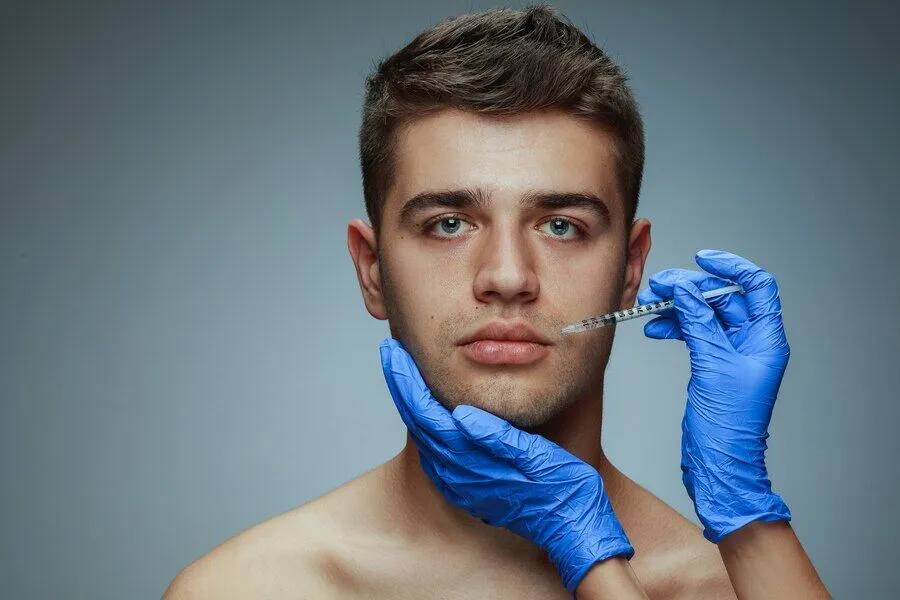
Can Frequent Use Be Harmful?
Applying the treatment too frequently before its effects have completely worn off is not the right choice, either in terms of safety or results. It is generally recommended to wait at least three months between treatments on the same area. This interval ensures a balanced response from the muscles.
Repeats performed at the correct intervals, however, are considered safe and preserve a natural appearance. Applying them more frequently than necessary can make facial expressions appear stiff and compromise comfort. That is why it is important to stick to the recommended interval.
The doctor determines the most appropriate timing for the next session based on the patient’s response. A structured schedule is preferred over a rushed approach. This ensures a balance between safety and aesthetics.
Botox and Pregnancy: Why Should It Be Avoided?
It is recommended to avoid this procedure during pregnancy and breastfeeding, not because there is definitive evidence of harm, but because there is insufficient data. Exercising caution during these periods is the general medical approach. Safety considerations necessitate postponing the procedure.
The same approach applies to individuals with certain neuromuscular disorders. In such cases, the effects may be unexpectedly pronounced. For this reason, a detailed medical history is taken before the procedure.
Selecting the right candidate is the most effective step for minimizing potential risks from the outset. In cases where this is not feasible, alternative methods are considered. This ensures that the individual’s safety is protected under all circumstances.
What Should You Keep in Mind for Safe Use?
The key to safety is having the procedure performed under a doctor’s supervision and under appropriate conditions. The product must be genuine, stored under the correct conditions, and administered in the proper dosage. These three factors minimize potential risks.
In addition, clearly communicating one’s expectations helps prevent requests for unnecessary doses. Requests for excessive doses compromise both naturalness and safety. Good communication is a prerequisite for a safe outcome.
Following post-procedure recommendations is also a key step in ensuring safety. Simple maintenance guidelines significantly reduce unwanted side effects. An informed patient is the most valuable partner in the process.
How Does It Support Safety in Medical Use?
The same substance has been used regularly for years to treat medical conditions such as migraines and excessive sweating. This wide range of applications has led to the accumulation of safety data over time. Aesthetic applications also benefit from this body of knowledge.
In medical use, higher doses are generally preferred over those used for aesthetic purposes. Nevertheless, the fact that serious problems are rare demonstrates the substance’s well-controlled safety profile. This track record instills confidence in its use for aesthetic purposes.
This knowledge, accumulated over the years, has also refined dosage and technical standards. As a result, the application has become increasingly predictable. Scientific monitoring ensures that safety standards are continuously updated.
Do Fears About Botox Reflect the Truth?
Most concerns about this procedure are based on hearsay or exaggerated accounts. In reality, the amounts used in cosmetic procedures fall within a range that has been considered safe by the medical community for years. Much of the fear stems from the negative connotations associated with the substance’s name. With accurate information, this perception changes quickly.
Another common fear is the idea that the face will remain permanently frozen. In reality, the effect is always temporary, and facial expressions are fully preserved when the dosage is appropriate. A frozen appearance is associated only with excessive dosages, and even that subsides over time. Therefore, with proper application, this concern is unfounded.
Fears of the substance spreading throughout the body and causing poisoning are similarly exaggerated. Cosmetic doses limit the effect to the injected area and do not result in systemic effects. The same substance has been used safely in medicine for years at much higher doses. This experience demonstrates that these fears are unfounded.
The best way to address your concerns is to discuss the procedure with a trusted doctor. You can feel free to ask any questions you may have before the procedure. An informed approach eliminates unnecessary anxiety. After all, trust is built on accurate information.
Botox Side Effects: Frequency and Duration
The table below summarizes typical side effects and their expected course.
| Side Effect | Frequency | Duration |
|---|---|---|
| Redness | Frequent | A few hours |
| Small bruise | From time to time | 2–5 days |
| Headache | From time to time | 1–2 days |
| Ptosis (drooping of the eyebrow or eyelid) | Rare | A few weeks |
Those who want to evaluate the question of whether Botox is harmful in its entirety What is Botox? and Botox complications You can browse our content; for all Botox treatments, botox applications You can check out our page.
To determine whether Botox is right for you, a personalized assessment begins with a detailed examination at the Medlook Clinic. Please contact us with any questions you may have. you can contact.
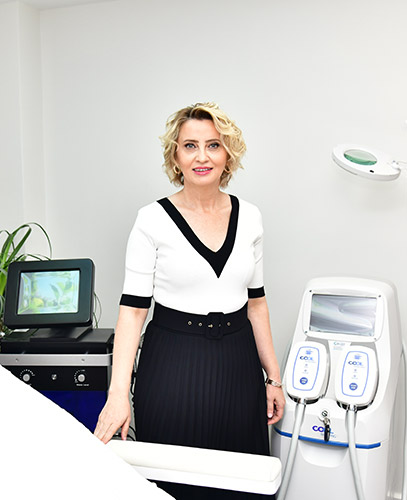
Author: Dr. Handan Yavuz, Medical Aesthetics Specialist. This content has been prepared to answer patients’ questions about the safety and side effects of Botox.
Contact Us
Contact Us Now for Free Consultation and Appointment!
Frequently Asked Questions (FAQ)
It is considered safe when administered in aesthetic doses and by a qualified practitioner. Most side effects are mild and temporary; serious problems are generally associated with improper administration.
The most common side effect is temporary redness and minor bruising at the injection site. These symptoms resolve on their own within a short time.
In rare cases, temporary drooping of the eyebrow or eyelid may occur due to an incorrect dose or injection site. This condition is not permanent and resolves within a few weeks.
When administered at the correct dose, the effect is limited to the injected area. Cosmetic doses are not expected to produce systemic effects.
Pregnant and breastfeeding individuals, those with certain neuromuscular disorders, and those with an active infection at the injection site should not receive Botox.






 Turkish
  English
  German
  French
  Italian