
Oral Support Therapy
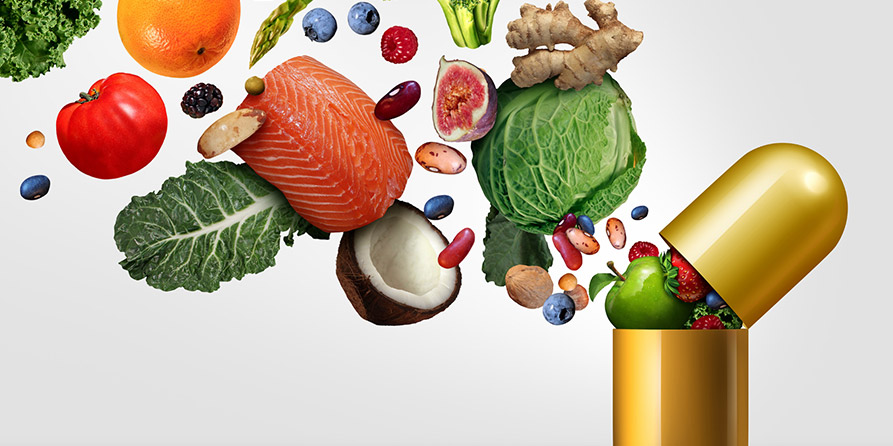
The problem of hair loss is a problem that can be observed at an earlier and earlier age, regardless of gender.
A one-way approach to the problem of hair loss is not enough for an effective treatment. As well as the combined use of different proven treatment methods, it is of great importance for the person to give up his/her wrong daily habits, to establish his/her diet and to reduce his/her stress level.
All our cells need substances such as vitamins, minerals and amino acids. Our body has a wonderful way of working; it doesn't distribute these substances that we get with food equally to all cells. Priority is always given to our vital organs. Once our organs are sufficiently nourished, it's time for hair, nails and skin. This means that for healthy hair we need more vitamins, minerals and peptides than we need to survive. When we cannot make up this deficit through food, oral supplements come to the rescue.
Oral Support Treatment for Healthy Hair
For effective and permanent treatment of hair problems, personalized applications rather than rote methods that are standard for everyone are essential. The first rule for this is to identify the cause of the hair problem.
So How Can the Cause of Hair Problems Be Determined?
First of all, your hair is analyzed with a detailed medical examination and your medical history, living standards and daily habits are evaluated. After this preliminary examination, it is necessary to find out what is going on in your body. For this, a series of laboratory tests called "hair check-ups" are used. Thanks to these tests, vitamins and minerals that your body lacks for healthy and strong hair and the presence of hormone irregularities that may cause hair loss can be detected.
For healthy, strong, dense hair, it may be desirable to have some vitamin or mineral values above the standard. For example, when you have a blood test, your average biotin level may be unobtrusive. However, the biotin level expected for stronger hair should be much higher than the average. In order to determine this, physicians specializing in hair treatments and hair health must interpret this test.
Multifaceted treatments and applications for the solution of hair problems always provide better results. In other words, in the light of scientific data and laboratory tests, interventional treatments such as hair PRP, hair mesotherapy as well as oral supportive therapies and local supportive therapies are used to achieve healthy hair.
Hair needs minerals, vitamins and certain substances to grow and maintain its structure.
The lack of these substances in the body can cause hair to stop growing, become dull, weak and weak and fall out. Oral supportive therapies can replace the missing substances and support hair growth.
Oral substances that support hair growth can be listed as follows:
Zinc : Zinc, one of the trace elements for our body, is very important for hair and nail health. It is inevitable to observe hair loss in zinc deficiency.
Iron: One of the most common causes of hair loss, especially in women, is iron deficiency. In iron deficiency, in addition to hair loss, many problems such as fatigue, weakness, fatigue, impaired concentration, weakness in the immune system can occur.
Vitamin D : It affects many systems in our body, from hair health, bone development, mental well-being to the immune system. In case of deficiency, serious problems can be encountered.
Copper: It is involved in the production of red blood cells (erythrocytes= red blood cells). It also contributes to the strengthening of the hair structure and prevents deterioration in hair color.
Manganese : It is essential for bone development, connective tissue, synthesis of proteins and some metabolic activities, and has positive effects on hair growth and pigmentation.
Magnesium : It is an essential element for hair, heart, muscle, teeth and bone health. In its deficiency, hair loss, muscle contractions, problems in the functioning of the heart, kidney problems, deterioration in bone and dental health are observed.
Folic Acid (Vitamin B9) : Folic acid, a member of the vitamin B family, plays an important role in cell renewal. Folic acid, which is involved in the production of amino acids and proteins, provides cell renewal for hair quality and skin beauty.
Biotin (Vitamin B7) : It is also called Vitamin H or vitamin B7. This vitamin, which provides an increase in hair quality, also has a serious effect on the growth rate. In biotin deficiency, hair breakage, hair loss and nail problems are observed.
Niacin (Vitamin B3) : It is a vitamin with a vasodilator effect (dilates blood vessels, thereby increasing blood supply). It contributes to increased blood circulation in the scalp.
Pantothenic acid (Vitamin B5): It is a vitamin used in the treatment of hair problems from the 1940s to the present day. It is known that hair loss is experienced in its deficiency.
Cyanocobalamin (Vitamin B12): It is a vitamin involved in oxygen transportation to the scalp
Keratin : It is one of the first substances that come to mind when it comes to hair. Because the building block of hair is keratin. When the keratin structure deteriorates, the hair loses its elasticity, strength and becomes vulnerable to external influences.
Sistin : Cystine, a precursor of keratin, also accelerates hair growth.
Inositol : It is a B-complex vitamin that the body needs in small amounts to stay healthy. It acts as a growth factor for keratinocytes (keratin-forming cells in the skin). It is also involved, together with choline citrate, in the production of lecithin, which is essential for the cell wall.
Isoflavone and Saw Pallmetto: While Isoflavone prevents the formation of DHT, Saw Palmetto prevents the DHT from damaging the hair-forming cell.
Ginkgo Biloba : By expanding the capillaries that carry blood to the hair follicle, it allows more blood and beneficial enzymes to reach.


 Turkish
  English
  German
  French
  Italian